
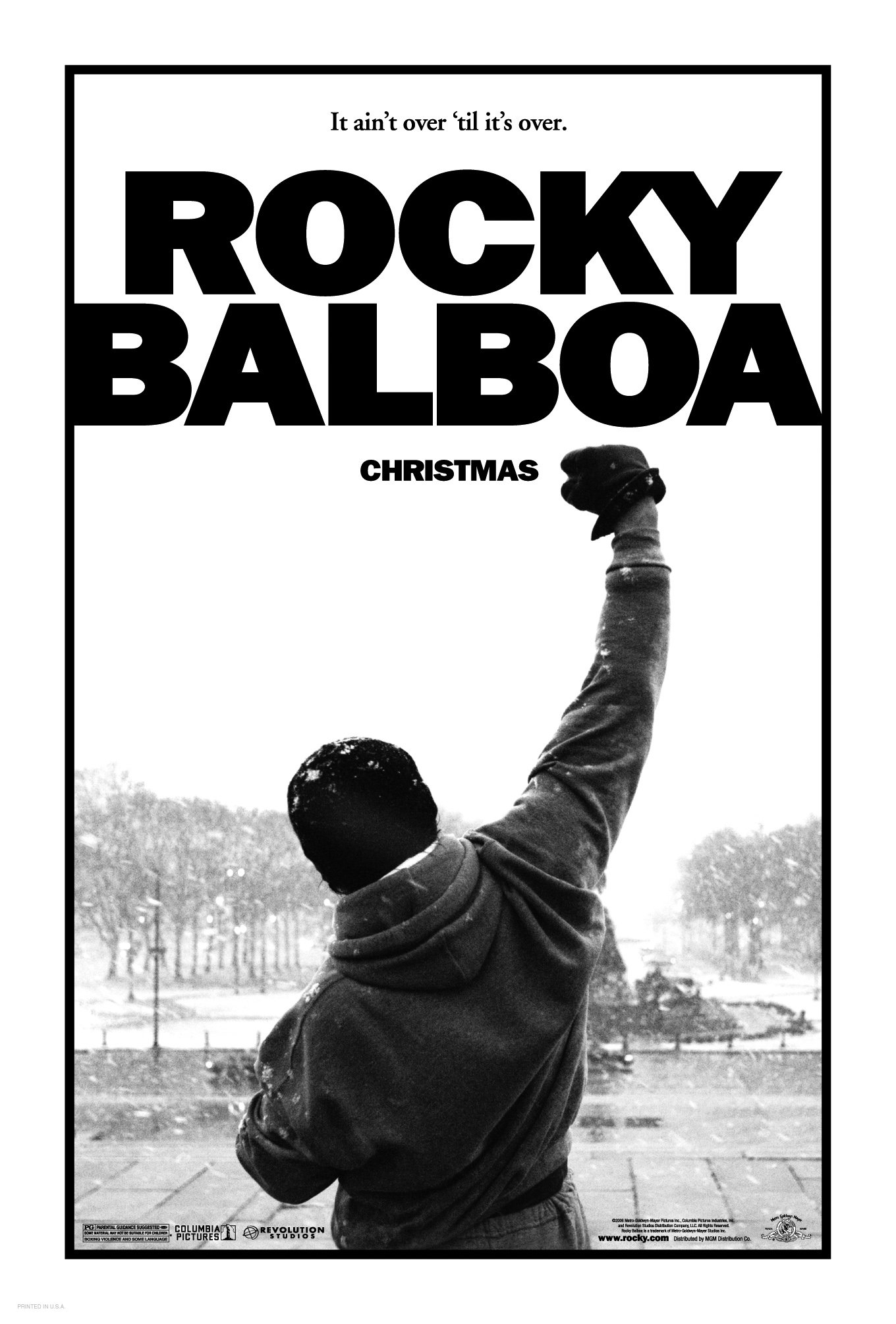
Starring: Sylvester Stallone, Burt Young, Antonio Tarver, Milo Ventimiglia, Geraldine Hughes, Tony Burton, Pedro Lovell, Michael Buffer, Mike Tyson, Skip Bayless, and Max Kellerman
Grade: A
Even though Sylvester Stallone himself would probably disagree, Rocky with his dog Punchy in this film is infinitely better than how he was with Butkus in Rocky and Rocky II. It meant more and felt like a bigger moment in Rocky Balboa, as his eye being focused on the older dog about to die but Rocky fully believing in the animal just needing another chance in life is a great way to shine a light on theme for the movie but in a different context.
Summary
Undefeated heavyweight champion Mason “The Line” Dixon (Tarver) wins another match by knockout, but he’s still booed. He’s looked at by many as the poster child of the decline of the heavyweight division and the entire sport of boxing. When he exits the ring, the crowd starts throwing ice at him. The commentators wonder if this will push Dixon to fight a real contender for a change.
“All of boxing is hoping for a warrior who thrills us with his passion”.
In Philadelphia, Pennsylvania, an aged Rocky Balboa (Stallone) wakes up, feeds his pet turtles Cuff and Link that he’s had since Rocky, gets in some pullups outside, and visits the cemetery to visit the grave of his deceased wife Adrian, a regular routine of his. He sits there in his chair while best friend and brother-in-law Paulie (Young) stands by. After Rocky places his chair in the tree for safekeeping, he notes how fast time moves. Paulie brings up how Rocky’s son Rocky Jr. should have been there, though he’s going by Robert (Ventimiglia) now, which is a something he started going by in Rocky V for the record. Rocky says it’s fine because Robert gets busy, but Paulie disagrees. Not wanting to talk about that there, Rocky instead asks Paulie if he’s coming tonight, but he says he’s working and he’s taken “the tour” the last three years. Rocky points out how it’s the anniversary, so Paulie gives him his word that he will be there. Rocky appreciates it and says he owes him one. Saddened, he turns and waves to Adrian’s grave on the way out. Somewhere in the city, Robert works in a serious corporate job. Rocky enters the lobby in hopes of seeing him. He sees Robert get in, but before he approaches him, Robert’s boss William Tomlison (Robert Michael Kelly) yells at Robert for being late and how his job performance isn’t good enough to be pulling stuff like that. He even says to him that he doesn’t give a damn who his father is. Once this conversation finishes and Robert heads to the escalator, Rocky walks over to stop Robert to talk. They discuss maybe getting some coffee or Robert stopping by Rocky’s restaurant, but he doesn’t really commit. He definitely can’t come to the restaurant tonight because he has plans with his friends. Finally, Rocky asks if he has done something wrong because he notices how uncomfortable Robert acts when Rocky comes to his work. Robert admits Rocky casts a large shadow before Tomlinson interrupts to say Robert won’t get anything done standing there. He then transitions this to introducing himself to Rocky. He talks about how he’s told Robert 20 times how he’s wanted to meet Rocky and assumes Rocky is very busy. He gives Robert his phone to take a picture of him and Rocky.
Once Tomlinson leaves, Robert tells Rocky he will change his plans for tonight and will come to the restaurant. Rocky appreciates it, and they have an awkward hug before he goes back to work. On the way out the door, several people stop Rocky to greet him or get an autograph and Robert watches as he goes up the escalator. Next, Rocky goes to a local open market to buy fresh ingredients for his restaurant, Adrian’s. Apparently, he opened it in 1995, five years after Rocky V.
Rocky goes to Adrian’s Restaurant, greets the valets, and asks hostess Isabel (Ana Gerena) how they’re doing. She says they’re okay, except for the “freebie reading the Bible”. It’s Spider Rico (Lovell), Rocky’s opponent from the opening of the first Rocky. Rocky assures Isabel that Spider is fine. She says he doesn’t even look like a fighter, but he is quick to say Spider could hit. Since she’s pregnant, Rocky asks how her stomach is feeling and gives her advice to rub olive oil on it, so her kid turns out strong. Rocky greets Spider on the way in and heads down to the kitchen to switch to a dinner jacket to look presentable for guests. He asks Jose to make a special dish for when Robert comes by later before heading back into the restaurant to talk to customers. Sometime after this, Rocky retells a story to some customers about one of his fights with Apollo Creed and how his trainer Mickey helped inspire him. At Mason Dixon’s mansion, Dixon goes privately to one of his cars and puts on a DVD of his last fight into the portable DVD player instead of just watching it in his house like a normal person. He’s still bothered about how the crowd reacted to his fight too. Back at Adrian’s, Isabel gets a phone call from Robert. He can’t make it. As Rocky is telling another story to some customers, Isabel tells him the news. Later, Rocky and Paulie go to the closed pet shop where Adrian used to work at, and Rocky stares through the door recalling flashbacks to a conversation they had in Rocky II. Paulie isn’t too interested in being there, but he’s doing it for Rocky. Rocky looks over at the big sign for Mighty Mick’s Gym and greets Mick as if he’s there before commenting how the sign is falling apart. Paulie responds that the whole world is falling apart and to look at them as examples. Nevertheless, Rocky doesn’t want to be negative. Instead, he goes on philosophically about this idea that if you live someplace long enough, you are that place. The two get back home and Rocky recalls when he brought Adrian home for the first time and how he just wanted her to trust him.
In that moment, he sees visions of her standing at the bottom of the stairs just like how she was in Rocky. He gets a little emotional as he remembers it, but a still drinking Paulie ruins it by asking if he’s done. Following this, they go to the old ice rink Rocky and Adrian had their first date at, and Rocky has his headlights on to look at the place.
It’s torn down, which makes Paulie happy, but Rocky remembers it all like it was yesterday and details how their date went on the ice. Miserable Paulie points out how Rocky said the same stuff last year and how he wants to go since there aren’t any chairs out there. Rocky tries to say it’s fine, but Paulie talks about how depressing and cold it is. Finally, Rocky asks what is wrong with him, so Paulie goes on about how he’s living backwards and how yesterday wasn’t so great. It was to Rocky, but Paulie doesn’t see it the same for himself. He knows Rocky treated her well, but he treated her badly, so he figures he doesn’t have to think about all this. Rocky bypasses this and tells Paulie that she always loved him, but Paulie can’t do it anymore and walks away. Rocky heads over to the Lucky Seven Tavern, the old bar he used to frequent in the first five movies. The bartender asks if he needs help, but Rocky just explains how he used to come down there a long time ago and was just looking around. Eventually, he gets a short beer and sits down at the bar, and the bartender notes how she heard about his wife’s passing due to cancer and heard she was a great person. Rocky wonders if he knows her, so she tries to remind him how he walked her home once and told her to stop smoking and things like that. With this, Rocky is able to remember. It’s little Marie (Geraldine Hughes) who used to hang by the Atomic Hoagie Shop! In the original Rocky, she was the one who flipped him off after he gave her all that advice and said, “Screw you, creepo!”. Marie doesn’t remember that part, but he remembers it well and reminds her. Just then, they are interrupted by random customer Angie (Angelyna Martinez-Boyd) who leaves her group to try and convince Rocky to buy her friends a round. She’s overly aggressive with her approach and gets antagonistic with Marie when she tries to send her away. Rocky takes Angie’s hand off his shoulder, and she gets mad at that too. He decides to give Angie advice on not playing a fool for the guy she’s with. Naturally, she flips out and tells Rocky that he’s the fool, how he’s not better than her, and how he’s nothing before going back to her seat.
Marie sarcastically asks if Rocky is glad that he dropped in, prompting him to suggest the neighborhood has changed a little. The manager asks the two if everything is fine, and Marie confirms it. The manager will take over, so she tells Marie she can head out if she wants. She greets Rocky too. Since Marie lives only 8 blocks from there, Rocky offers to give her a ride and she accepts. In the parking lot, they discuss her divorce and how she has a son. When they get to his van, the group of customers that was bothering him earlier for a round start insulting both of them. They get into the van and try to ignore it, but Rocky gets pissed off enough that he has to address it. He storms back out of the car, grabs the one guy with them, pushes him against the wall, and threatens to punch him before getting an apology from the guy. He gets back to the van and tells Marie that the man sends his apologies, getting a smile out of Marie. Elsewhere in the middle of the night, Dixon heads to his old stomping grounds, a boxing gym run by his old trainer Martin (Henry G. Sanders). Using his old key, Dixon enters and it wakes up Martin. Dixon wants to talk, and Martin says he has time since Dixon’s people fired him. Dixon swears he had nothing to do with that. Back with Rocky and Marie, they are at Marie’s place where Marie says they moved in to the temporary place a year ago. She will look for apartments soon. Seeing the positive in things, Rocky lovingly talks about the history of the area like the “Bucket of Blood” that was the Cambria Fight Club where he took a lot of beatings. In addition, he goes on about some of the buildings being 100-150 years old, but it’s cool because he’d be falling apart too if he was 150 years old. After noting how her outside light bulb is burnt out, Marie stops because she sees her son by the streetlight hanging with one of his friends. She wishes he wouldn’t stay out this late. Rocky is amazed. Since the last time he saw her, she was a kid and now she has one of her own, another reminder of time moving so fast. He starts to note the resemblance she has with her son, resulting in her awkwardly correcting Rocky and revealing that the black “Steps” (James Francis Kelly III) is the one who is actually her son, not the white kid next to him.
His father was from Jamaica, prompting Rocky to reply, “Jamaica? European”. She asks if he wants to meet him, but Rocky declines because it’s getting late.
Once he goes to his van and Marie walks over to grab Steps, Rocky changes his mind and introduces himself to Steps. Before going, he invites the two to come over to eat at Adrian’s sometime, and he leaves his card on the steps of their front porch, probably just so he can make the joke revolving around the kid’s nickname. Back at Martin’s gym in the middle of the night, Martin tells Dixon that Dixon knew what was best for him when he was 10 and walked into his gym alone. Martin knows Dixon has everything money can buy except pride. Pride is what got Dixon out of there, but losing is what brought him back. He thinks people like Dixon need to be tested. They need a challenge. Dixon doesn’t think there’s anyone out there, but Martin disagrees. There’s always someone out there. When the time comes and he finds someone standing in front him that’s not backing down, that’s good. He considers it “baptism under fire”. If he gets through that, he will get the only kind of respect that matters in this world, self-respect. Dixon thanks him and offers to help him in anyway, so Martin jokes that he could give him some money. Sometime after, Rocky takes a picture for a group of customers at Adrian’s before Isabel sends him to the kitchen, as Spider Rico wandered down there. Rocky checks on Spider only to find him doing dishes because he feels bad for not helping out. Rocky would rather he just be his guest and eat, but Spider insists because Jesus would want him to work and he will fight Rocky otherwise, as he thinks Rocky got lucky last time. Rocky just accepts it. Isabel then brings Rocky up because he has guests. It’s Marie and Steps, as they kept the card. Steps doesn’t look too excited to be there, but Marie is and Rocky is happy to see them both. At an Irish pub somewhere in the city, Robert is with his friends and ESPN is on one of the TVs. On the program, they do segment Then Versus Now, a computer simulation between current champion Mason Dixon and a prime Rocky Balboa. Robert and his friends start watching intently, though Robert is more bothered by the attention Rocky is still getting.
At Dixon’s house, he’s playing basketball outside until one of his friends calls him in to see the trash they’re talking about him on TV.
Chuck Johnson gives the edge to Rocky because he had tougher fights in a tougher era of boxing compared to Dixon being spoon-fed opponents. He thinks Rocky would win by knockout. The people in the Irish pub start cheering, which draws the ire of Robert. Bernard Fernandez argues that Dixon is a victim of his own dominance, so he hasn’t had knock-down drag-out brawls and has never had to dig down to rally back. If he tries to dig down against Rocky, “He’s gonna find that he doesn’t have a big enough shovel”. He also gives the edge to Rocky. Bert Sugar of The Ring magazine claims they don’t know what Dixon is made of since he hasn’t had serious competition. However, if they factor in their primes and Dixon’s speed and slashing offense, he thinks Dixon wins. All of Dixon’s friends at his house start high-fiving over the one guy who agrees with them while Dixon stares at the television. With this, they show the computer simulation of the hypothetical fight as almost a modern-day version of 1970’s The Super Fight. Dixon starts out strong because Rocky never came up with any defensive plan for that jab, and the real-life Dixon smiles while watching it. However, it turns to a frown quick as Rocky fights back in Rocky fashion before nailing a knockout punch for the win. At the Irish pub, everyone cheers and Robert’s friends call him “Baby Rocky”, which naturally gets under his skin. At the end of the night, Rocky drives Marie and Steps home. Once Steps goes into the house, Rocky asks Marie if Steps would want a job at Adrian’s just to make some extra cash on the weekends. Marie can’t help but ask why Rocky is being so nice. Rocky misreads what she’s asking and says his wife is gone but she’s not really gone, implying that nothing can happen between them. Marie assures him that’s not what she thought. She just says that he doesn’t owe them anything. As Rocky changes the light bulb on her outside porch for her, he questions why it has to be a matter of owing something to get something (“Let there be light”). It’s just Rocky being Rocky. He just thinks it would be nice to hang out with Steps, and she agrees.
Soon after, Rocky takes Steps to a dog pound. He used to come there a lot to sightsee, and he comments how you can learn a lot talking to dogs. Right away, Steps thinks he should get this young, tougher breed of dog, but Rocky’s eye is drawn to the older dog with scraggly hair and less energy. He directs Steps’s attention to this dog and how it’s laying there because it’s saving his energy, though Steps argues that he’s just dead. Rocky thinks the dog still has a lot of good mileage left. With some good food and new friends, he could be back. Rocky is set on this dog but questions what his name should be. Steps says Rocky should name it if it’s his dog, but Rocky considers it a community animal and it’s 50/50. Steps tries to back out of the responsibility of naming it, but Rocky tries to encourage him since he thinks every guy should name an animal something. Steps jokingly suggests “Fleabag”, and Rocky tries to act like it’s not too bad, but he pushes him to attempt another one. Steps comes up with “Punchy”. Rocky likes this one, which even surprises Steps. Rocky gives him credit because it’s easy to remember, it’s not hard to spell, and once it’s in your brain, you never forget it. To be fair, the first and third points are essentially the same thing, but it’s whatever. Rocky tells Punchy he’s coming home and it barely acknowledges him while Steps admits he was just joking around. Rocky knows and tells Steps he’s a funny guy, which gets a chuckle out of him. At Adrian’s later, Steps looks at the painting of Rocky’s third fight with Apollo at the end of Rocky III, along with a multitude of pictures and accomplishments on the wall. Paulie walks in and goes right over to the TV, ignoring everyone. Isabel gets Rocky’s attention because she doesn’t want to deal with Paulie’s annoying self, so Rocky excuses himself from some customers to approach Paulie. Paulie mentions how they’re going to talk about the computer simulation fight, but Rocky isn’t interested because they’re about to serve the day’s special (“Italian food cooked by a bunch of Mexicans ain’t so special Rocko”). Rocky gets annoyed and turns the TV off, even though Paulie skipped out on work to see it.
Paulie grabs some drinks anyway and sees Punchy, Rocky’s new dog. In typical Paulie fashion, he notes how ugly the dog is. Steps is about to leave and lets Rocky know, and he tells him how cool all the stuff he has from his career is. Rocky appreciates the kind words. Once Steps leaves, Paulie asks Rocky, “Who’s the criminal?”. Rocky lets Paulie know that he’s a nice kid, but Paulie thinks he dresses like a bum. Rocky jokes that this is coming from a human hamper, but Paulie just tells him to hide the silverware. Just then, Spider comes from the back to put some stuff on the counter, staring down Paulie before going back to work. Paulie asks Rocky to confirm if he knocked out that “bum” once, but Rocky tells him to give it a rest. Paulie turns the TV back on while having a drink. When Rocky walks back towards him, he asks for Rocky to give him a break because he’s going to be late to work for this. On the news, the anchor reminds the audience of 1970’s The Super Fight movie that used a computer program to determine who would win between Muhammed Ali and Rocky Marciano, with the real boxers sparring to act out the results. It’s been 35 years since Marciano was ruled the winner by a much-disputed computer decision and not much has changed, transitioning to the recent simulation of Rocky versus Dixon. They show the ending of the “fight”, and Rocky and Paulie watch. Dixon’s manager L.C. Luco (A.J. Benza) points out how it was for entertainment, but it’s now become this rallying cry for people who think an old-school athlete like Rocky could be better, so the computer technology has to create what isn’t. He thinks it’s irresponsible. They ask Skip Bayless how Rocky would fare against Dixon, and he’s quick to talk about how badly he would perform. Skip thought Rocky was completely overrated, which is 100% something Skip would say. When someone mentions Rocky’s restaurant, Skip jokes that the special is pounded chicken. Watching this, Rocky is hurt at their words, but Paulie tries to cheer him up by adding that mentioning his name is like a free advertisement.
Rocky finds Robert on the street that night to Robert’s surprise since it’s so late. Rocky tried calling, but he wasn’t picking up. Robert invites him inside, but Rocky declines. He just wants to get his opinion on something. Since you only go around once, he’s thinking about fighting again. It wouldn’t be big or anything. He’s just thinking local stuff. Robert tries to remind him of the reality of his age and how people will think he’s crazy, but Rocky doesn’t think it matters. Robert sees this as his ego talking and questions what he has to prove. Rocky argues that he stopped thinking the way other people think a long time ago, and Robert says he does the same. Even so, he wants Rocky to face reality. Rocky only thinks the clothes are different today. Robert doesn’t know what Rocky wants from him, and Rocky admits he just wants them to get involved (“Home team”). Seeing where Rocky is at, Robert assures him that whatever he’s going through, it will pass. He tells him time will catch up to all of them at some point, prompting Rocky to add “…especially if you’re standing still, you know?”. Robert hugs him, and he hugs back. Rocky goes to see Paulie at his work at the meatpacking place, and Paulie correctly guesses that Robert thinks Rocky is crazy for wanting to fight again. Paulie lets him know that no one is giving him a title shot, but Rocky knows that and doesn’t want one. Paulie is painting a picture instead of working by the way. In any event, he wants to make sure Rocky’s idea isn’t that of a “mental disturbance” or if he’s mad that they took down his statue, but he’s not. Paulie jokes that if it’s about money, he can hang a sign around his neck saying, “Punch me $5” and he’ll make big money. Paulie questions if Rocky has “peaked” yet, so Rocky points to his stomach and admits there’s still something left in there. Paulie asks if it’s anger and if he’s angry that Adrian “left” him, prompting an emotional Rocky to remind him that she died. Realizing he went too far with that one, Paulie backtracks. Rocky starts to fight tears about how it’s hard to breathe, how there’s this beast inside, and how he never knew it was supposed to be this hard.
After he calms down, he asks Paulie if he wants to come by to help him train, but Paulie reminds him that he has a job. Recalling Rocky’s own quote about becoming one place if they stay there long enough, Paulie says this job is all he has. Rocky understands.
If Paulie does have time though, Rocky invites him to come down to see him train, adding that he would appreciate it. Seeing how emotional Rocky is about it, Paulie tells him he will. Following this, Rocky meets with the Philadelphia Athletic Commission, as they consider the application to issue Rocky a discretionary professional boxing license due to his ineligibility to be licensed as a matter of right. It’s just the commission and Rocky, as he chose to represent himself. He declines an opening statement since he was just curious how he did. The main guy details that the medical advisory board informed them that the battery of tests to which Rocky has been subjected, he’s passed with flying colors. Rocky is elated to hear it. Nevertheless, the commission cannot in good conscience recommend Rocky for a license and deny his application. Rocky is confused because he did exactly what they asked. He asks why he was given all those tests if they were never going to pass him, but they ignore him and say they have to stand by their decision. Rocky gets up and walks to the door, though he turns to remind them of the rights he has. He might not know the name of any of the official documents, but he knows the gist of it. He mentions his rights in “that official paper they wrote down the street there”, so the man reminds him that it’s called the Bill of Rights. Rocky thinks it has something to do with going after what makes you happy, so the guy says that’s actually the “Pursuit of Happiness” that’s in the Declaration of Independence. The man asks what Rocky’s point is, so he explains that he’s pursuing something, and nobody looks very happy about it. The man argues that they are looking out for Rocky’s interests. Rocky appreciates it but doesn’t buy it. He thinks they are looking out for their own interests. He knows they are doing their job, but he questions why they are stopping him from doing his. If you’re willing to battle to get to where you want to get, who has the right to stop you? He questions whether any of them have something they have wanted to accomplish and if they have been told “No” even after they pay their dues and how no one should have the right to tell them that. It’s your right to listen to your gut, it’s no one’s right to say “No”, and “You have earned the right to be what you want to be and do what you want to do!”
He just wants them to do what’s right, leaving the room in silence.
Sometime later, Robert’s friends show Robert after work the newspaper headline detailing how Rocky has passed the test and got his boxing license again. At Dixon’s place, he is told by Luco that his last two PPVs didn’t sell well and he’s not making championship money. Considering the lack of big names out there, he urges Dixon to consider a different opportunity. They both are aware that Rocky got a license, but Dixon immediately declines. He knows he would dominate Rocky without question, and promoter Lou DiBella chimes in to agree. However, that’s not what it’s about. It’s about making money. They can capitalize on this computer fight and get a million PPV buys. That means $15-20 million. Still, Dixon has no interest. Luco asks what he wants to do instead because no one is beating the door down to watch him fight anymore. Dixon argues they have guaranteed fights, but Luco retorts that they don’t. All the fights Dixon has come up with have gotten rejected because they are all bums. There are no opponents with marquee value. With Rocky, people can relate to his story, and it’s a no-lose situation for Dixon. Luco explains how people don’t like Dixon anymore, and they don’t support him. Lou tells him that everyone knows he can kick old man Rocky’s ass, but he shouldn’t. He can leave him with just a little bit of dignity. This way, they can say he has compassion. It will give him a whole new audience, which will allow him to double his money. It can replace his current image. Dixon counters with how they made up his old image anyway, but Luco argues that they made him money and Dixon did the rest. Dixon is pissed off and heads back to Martin’s gym. He demands Martin be brought back on his team too and he won’t budge on it. At the same time, Rocky goes over with Punchy to visit Marie, and he invites her out on a walk. As they walk and talk and discuss Punchy and how Steps named him, Rocky asks Marie if she wants to work at Adrian’s. Since Isabel is having a kid, they’re going to need a hostess, so he wants Marie to do it. She appreciates what he’s doing for Steps and everything but turns him down. He tries to persist, prompting an aggressive response from Marie to “drop it”.
After an awkward pause, he wants to see what’s wrong, but she starts walking away and thinks there would be a hundred better people for the job. Rocky suggests she give it 2 weeks, but she doesn’t even want to try. He asks her who put these thoughts in her head because they don’t get there by themselves, but she ignores this and thanks him for coming by before walking away again. Rocky then asks if she’s been dancing in a while because since she’s been dancing around these questions, maybe she can dance with him. He jokes with her some more and encourages her, adding how she can class the place up and how she deserves better. Finally, she smiles and agrees. Meanwhile, Paulie is let go from the meat place. With a slab of meat in one hand and his paintings in another, he goes right over to Adrian’s and to the bar. Not knowing who he is, Marie tells Paulie that deliveries are in the back. After he says he’s not a delivery guy, she asks if he has a reservation prompting him to jokingly ask, “Do I look like a freaking Indian?”. Marie gets Rocky’s attention, but he explains how Paulie is a relative. He sees Paulie’s black eye, which Paulie says he gave to himself. Paulie then says he’s celebrating his retirement. Knowing Paulie is lying, Rocky asks when they started giving retired people meat instead of watches. This sets Paulie off who yells that he has the watch Rocky gave him and doesn’t need it before storming through the restaurant making a scene. Rocky runs after him to talk in the alley outside the restaurant, and Paulie gives him credit for going back into the ring, knowing he’s going to take a beating. Still, he knows Rocky will do alright because of the stuff “in the basement”, what’s left at the pits of his stomach like Rocky was talking about before. Rocky thanks him as Paulie walks away. Going back inside, Rocky makes sure everything is calmed down. Next, Marie directs him to two more guys who want to talk to him. It’s Luco and Lou DiBella. They have Rocky sit down after establishing Luco as Dixon’s manager. After saying Dixon is a huge fan of Rocky, Luco says they have the promotional contract for Dixon.
Acting like it was Dixon’s idea, they tell Rocky that Dixon thought about setting up a special exhibition fight between the two once he heard Rocky got his license. Rocky questions why him, but Luco says Dixon respects the hell out of Rocky. Plus, the computer fight got people curious.
Even so, Rocky isn’t interested in getting mangled and embarrassed out there. Again, he was thinking about fighting locally in small events. Luco doesn’t think he will get hurt like that and wants Rocky to think of it as a glorified sparring session. They’ll even donate a portion of the fight to charity, and it will be in Las Vegas. Luco mentions how the cold is probably killing him to sell him on the idea. Rocky admits he’s a little stiff, and Luco is quick to say Rocky was better when he warmer. On top of all that, it will give Rocky new stories to tell at his restaurant. Rocky has to think about it and excuses himself. Luco tells Lou that they got him. He knows it. He even adds that if Dixon met Rocky in his prime, he’d kill him. That night, Rocky drives Marie home and he’s still mulling over his decision because he didn’t think this would come along. Marie thought this is what he wanted, but he admits he rambles about how he thinks what he says is true, though he’s not even sure what is true anymore. He pushed this crazy idea about fighting and wonders what it’s all about. Does he really care about standing toe-to-toe, or is it ego like how Robert said? Is he just some old man trying to replace old pain with new pain? Marie notes the side of Rocky that is full of life and how all of us have that fire within us. Sadly, we never get a chance to use it and then it just goes away. Rocky can, however. He has been gifted this opportunity, so she thinks he should do it. Why not? This is who he is and who he always will be. She encourages him further by adding, “… And you don’t move aside for nobody until you’re ready to move”. It doesn’t matter how it looks to other people. All that matters is how it looks to him. If it’s something he wants to do and has to do, then do it. Fighters fight. She then jokingly asks if he’s going to punch her to break the tension, and he laughs. He thanks her before she leaves.
“Fighters fight, right?”. Well, the one-night return of Rocky Balboa in a boxing ring is upon us.
My Thoughts:
Making up for the mistakes of Rocky V, cinema’s most endearing protagonist gets the finale he deserves, with star, director, writer and creator Sylvester Stallone giving a tour de force performance as the aged fighter looking to prove the doubters wrong one more time. Just like how the original Rocky‘s basic themes were brought to life due to star Sylvester Stallone channeling his own struggles in trying to make it in Hollywood into his Academy Award-nominated screenplay, Stallone uses this same energy in forming the sixth movie in the franchise. By the time 2006 was rolling around, Stallone’s star was waning. After coming off three straight bombs as the leading man and a smaller role as the antagonist of Spy Kids 3-D: Game Over, the actor was in limbo. Many thought his time as the box office attraction whose name guaranteed a hit was over, resulting in a three-year break from the limelight. For the first time since before he broke out as a star in 1976, he was being written off by the naysayers. They all said his time was done, and he would regularly be the target of jokes from critics, comedians, and late-night talk show hosts due to his career downswing. What he needed was inspiration, an opportunity to prove everyone wrong once more, just like how he did all those years back. In doing so, he returned to his baby, the franchise that made him with 2006’s Rocky Balboa. Stallone OWNS it in front of and behind the camera. Visibly older and with a bulkier body than ever before, Stallone doesn’t shy away from who he has become. Just like the lovable protagonist, he takes the punches thrown at him and acknowledges his age and how he’s not who he once was. However, even if Rocky’s newest opponent in Mason Dixon speaks the words of Stallone’s real-life critics in telling the hero, “It’s already over”, Stallone uses this movie to respond with, “Ain’t nothing over ’til it’s over”.
Dixon: “What’s that? From the 80s?”
Rocky: “That’s probably the 70s.”
Sylvester Stallone seemingly writes the screenplay not only to acknowledge and reply to his critics with the character arc of Rocky this time around, and how the retired fighter is responding to the fast-paced lifestyle of the modern world, but also to satisfy the generations of fans the series has accumulated since its inception. It’s personal, and the passion is felt in every frame, as Rocky tries his hardest to put on a brave face for all the people he encounters, despite life’s many tragedies breaking him down internally. Life being as fleeting as it can be is not something we think about when we’re younger, especially as we keep moving in pursuit of dreams, goals, love, and whatever else. This is where Rocky’s son Robert Balboa is at. Now an adult, Robert represents the younger generation who are deep in the middle of this pursuit to create a life for themselves. The realities of life don’t dawn on Robert initially because he’s so focused on himself, which is why he has such an uneasy relationship with his father in Rocky, someone who is at the age where it’s hitting him from all sides. Always a goodhearted soul, the rustic fighter is more world-weary than ever before. He’s taken beatings in the ring that very few boxers have experienced. Nevertheless, it doesn’t hurt nearly as much as the beatings he’s taken out of it. We’ve already seen him struggle through the years accepting the deaths of Mickey and Apollo Creed, but the death of Adrian is one he can’t shake. The love of his life passed away three years ago from cancer, and Rocky has never fully recovered from it. She’s still fresh in his memory, and he misses her every day. Every year around the anniversary of her death, he goes on a tour of all his favorite spots involving his history with Adrian, letting us reminisce on their relationship just as he does. In one heartfelt scene towards the end of Rocky’s little tour, he talks happily about the first time he took Adrian back to his place. He looks at the bottom of the stairs and has a vision of a young Adrian standing there looking at him like it was yesterday.
Those who have experienced such losses in their life can feel the moment in their soul.
The humble Rocky was always kind and caring to all of his friends and family, and we know how strong his marriage was to Adrian through those five films. She helped him get through so much in their lives, and the foundation they built together was something most married couples strive for. Losing Adrian to cancer makes Rocky lost. He’s a fighter through and through but seeing his wife fight a battle that he can’t do anything about is something he never fully recovers from, continuing years later in Creed. In arguably his best performance in the titular role since the original Rocky, Stallone is magnificent in getting this message across of where the character is at in life. It brings his story full circle from the day it started in 1976, with the seemingly indestructible hero receiving the same unprotected punches of life all over his body, showing he is just as human as the rest of us. He’s loved, lost, and has had to fight his entire life. Now, he’s wandering aimlessly trying to figure out what to do in an effort to keep moving forward. His son Robert works in Philadelphia and they do talk, but the work-focused Robert struggles with his dad’s celebrity and is trying to shed the label of being “Baby Rocky”. It’s something he’s struggled with since Rocky V when he was fighting bullies in public school. Here, he’s in the corporate world, but he can’t achieve anything on his own merit. By his own account, he has only gotten his current job because he’s Rocky’s son. When he is yelled at by his boss Tomlinson, it only intensifies his point of being saved by his name because Tomlinson tells him directly that he’s not performing well enough to be late for work. The viewer may question why Robert would act like this or have this much of a problem with the older but still lovable Rocky as a father, but it’s hard not to see where Robert is coming from. Rocky is one of the most famous boxers in the world. On top of that, Robert works in Philly, Rocky’s hometown. Every sports bar probably has Rocky memorabilia and everyone is either a fan or was a fan at some point in their lives. At the very least, they know who Rocky is.
Knowing the city and how recognizable the last name “Balboa” is, surely you can expect Robert gets a comment by a fan or a hater, virtually every time his last name is mentioned. In almost all public settings, you have to assume that no one is asking Robert about his life if they find out he’s the son of Rocky. It’s that simple. Imagine 20 years of this type of treatment. Imagine having a hard day’s work at a high stress level job and your friends minimize all the work you have put in by referring to you as “Baby Rocky”, despite seeing how it visibly bothers you. It’s not Rocky’s fault that he was successful, but Robert wanting to distance himself from this life is understandable, albeit heartbreaking for our beloved protagonist who just wants to be close with his son like how they used to be (“Home team”). Rocky’s humor and positive attitude consistently gets a chuckle from the audience throughout like how he tries to awkwardly joke with Robert “Don’t let those numbers drive you crazy. Use an eraser and get rid of all of ’em”. Really, it’s classic Rocky humor that makes the viewer smile, but we can tell how this is more than just a joke to try and calm his son down. It’s Rocky’s effort in trying to reach out and connect with Robert, as it’s difficult for him to express his innermost thoughts and feelings while Robert drifts further away from him almost daily, as Robert constantly comes up with excuses to avoid hanging out with him. The pain can be seen in Rocky’s gaze, no matter the lighthearted comment or words of encouragement. This is the brilliance in Stallone’s performance, as his subtle expressions of internalized sadness while trying to smile to make sure people don’t think he’s on the verge of a breakdown tell tales of heartbreak without needing to go on an extended monologue. Nevertheless, Rocky satisfies this side of the fence too, with two impassioned speeches in Rocky Balboa that are considered to be two of the most memorable scenes in the history of the franchise. One is Rocky’s inspiring speech about how no one should be able to tell you “No” if you are willing to do whatever it takes, to do what you want to do, which leaves the boxing commission with no choice but to clear him for his license.
The other is one of the best cinematic moments of the 2000s. Of course, we’re referring to the legacy-defining, often repeated, “Keep moving forward” scene between Rocky and his son Robert on the sidewalk, as Robert can’t believe he’s going through with a comeback because of what it will do for his own status. Finally, the father and son have it out, and it needed to happen, as it was clearly something that has been brewing for years.
Robert does care for his father’s health and mentions how he doesn’t have to do this, but once Rocky explains that he thinks he does, Robert has enough. He explains how it wasn’t easy living with Rocky and how no one sees Robert for who he is. To everyone else, he’s just the spawn of Rocky. With Rocky taking this highly publicized fight, it’s going to be worse than ever, and it rightfully hurts Robert because he was finally gaining some ground in his own life. This confuses Rocky, as he knows how hard Robert has worked and how much he has going on in his life. After Robert directly requests for Rocky to call off the fight because it’s going to end up bad for both of them, Rocky questions if Robert thinks he’s hurting him. Robert confirms, so Rocky admits it’s the last thing he wanted. Even so, he gets real with his son in an Oscar-worthy speech, once Robert brings up caring what other people will think and how Rocky’s efforts might turn out to be a joke, with Robert being forcibly included in the embarrassment. After Rocky talks about how wonderful Robert was as a kid and how he felt like every day as his father felt like a privilege, he talks about how Robert has succeeded in becoming his own but changed along the way. In a way, Stallone himself seems to be passionately speaking to the critics who tried to talk down on his return to the Rocky series or how he’s passed his prime with his emotional speech. He tells Robert how he stopped being himself and how he started looking for others to blame. He reminds him, “The world ain’t all sunshine and rainbows. It’s a very mean and nasty place and I don’t care how tough you are. It will beat you to your knees and keep you there permanently, if you let it. You, me, or nobody is gonna hit as hard as life, but it ain’t about how hard you hit, it’s about how hard you can get hit and keep moving forward. How much you can take and keep moving forward. That’s how winning is done! If you know what you’re worth, then go out and get what you’re worth, but you gotta be willing to take the hits and not point fingers, saying you ain’t where you wanna be because of him or her, or anybody! Cowards do that, and that ain’t you! You’re better than that!”.
Not since the climax of Rocky IV have we felt such a bone-chilling movie moment that would live in our heads rent-free for a lifetime. It’s a scene that reminds audiences what cinema is for, and Rocky walking past Robert after the final quip of “Don’t forget to visit your mother” was the metaphorical knockout punch to end it. How can that exchange not give someone goosebumps? In context or without it, it’s a perfectly written piece of dialogue that can capture the heart of anyone that views it because of the truths being told. Until Robert starts to believe in himself, he’s not going to have a life. Rocky believes in himself and has to do this for him. It’s why Stallone felt the need to make one more Rocky when everyone thought he was done. It’s why this story resonates even more when the actor’s life and career are taken into account. So, what if Stallone got older? It’s just like Rocky says here, as an almost meta response to his critics of the 2000s and the 2010s, “Yeah, but you think u oughta stop trying things ’cause you had a few too many birthdays? I do not”. If the actor is willing to go through all of these attacks on his image or what people said about him in this stage of his career, just to put on one more show with the character that started it all, who has the right to stop him (“I’d rather do something I love badly than to feel badly about not doing something I love”)? The answer is no one, and the fact that Rocky Balboa succeeded on that level that it did and led to Sylvester Stallone’s late career resurgence in the 2000s and 2010s was the ultimate gift to the fans. Who would have thought that returning to the character that launched his career in Hollywood would be the same one that would help revive it? Who would have thought that a SIXTH film in a boxing franchise was even possible to keep interesting? It was only Stallone standing on that hill and he was willing to die on it, succeeding on his own merit and abilities once again. How can you not respect the man?
Besides this, he was able to right the wrong of 1990’s Rocky V in the process. It’s not that Rocky V was trash, but it was far from the conclusion the character deserved. Taking this into account, remembering what audiences worldwide loved about the series, and adding a new layer of depth to the evolution of the saga by bringing the elder statesman into the modern era, Stallone handles all aspects of the production to ensure its success and succeeds mightily, while also giving one of the best performances of his career. The fact that he’s still able to play this same character all these years later and even into the Creed franchise and STILL put on compelling, Oscar-worthy performances worth noting is a testament to the true acting talent Stallone is and almost never gets credit for. Speaking of Rocky V, there have been a lot of ideas that fell to the cutting room floor regarding the conclusion of the Rocky series and a lot of them happened for good reason. In the fifth movie, the original idea was to bring back an older Marie as an adult prostitute, confirming Rocky’s worst suspicions about her life trajectory when he tried to give her advice in the original Rocky. Considering the somber and depressing narrative Rocky V already was, this would have been way too much for not only audiences, but Rocky himself to handle. Thankfully, it was cut for time, and it never got far enough to even be mentioned, which allowed for Marie to have a much more positive character arc this time around in Rocky Balboa. Unintentionally emulating an early Jenna Fischer in her performance, Geraldine Hughes takes on the role of an older Marie. The single mother is still a Philly resident and a kind, low-key bartender with a caring heart, making viewers smile when she reveals that she took Rocky’s words of advice better than viewers thought she did in 1976. In just their little conversation and her reintroduction to the franchise, we are able to see how powerful and positive Rocky’s influence has been in-universe, just as much as it’s been the source of inspiration and motivation for worldwide audiences and generations of young men and women in real life.
Stallone knows the legacy of the franchise he started and humbly writes and directs Rocky Balboa with this in mind. It’s a love letter, an ode to what this character and these movies have meant to him and for all the people that followed him along the way. It’s felt every step of the way, which is why this sixth film really does recapture the magic that some have argued was lost at some point in the series depending on who you talk to.
As a consistent Paulie hater, it sucks that the miserable alcoholic lived this long and Adrian didn’t. However, just like how I stated in the review for Rocky IV defending Apollo Creed’s death, Adrian passing away had to happen. Paulie dying wouldn’t have had the same emotional weight, as evidenced by the teary-eyed stares and heart-wrenching speeches to Adrian’s tombstone from Rocky, a regular visitor of the cemetery now that she’s gone. These moments just mean so much more to fans than it would Paulie. It really feels like this is all Rocky has left, which is why that hug from Robert at the cemetery is such a sincere moment. When he closes his eyes, you get goosebumps because you know it means the world to him. Once again, Stallone made the right call with this decision. According to Stallone himself, Adrian was in the original script, but “It didn’t have the same dramatic punch”. When you play Rocky Balboa over in your head and think of the better elements of the film and Stallone’s performance as the broken Rocky looking for purpose, it’s hard not to agree with the decision, even if it is sad. Rocky’s state of mourning, feeling lost, it getting increasingly hard to hide, and how it empowers him to get back out there and try to overcome this personal adversity with a new challenge fuels the movie’s spirit. In doing so, it actually honors the character of Adrian, breaking Rocky down but also giving him a reason to get back up again in this later stage of his life, especially when he could have called it quits for good. It’s all about hope, belief, and spirit, and it’s powerful stuff. Additionally, Burt Young works well here as the last remnant of the good old days of Rocky, as he is the realist cynic that disrupts the dreams and positivity that Rocky tries to use to mask his hurt. Furthermore, his final speech before Rocky makes his entrance to Paulie’s choice of Frank Sinatra’s “High Hopes” is right up there with his heartfelt one before Rocky faced Drago in Rocky IV (“I know there’s a lot of stuff you gotta get out of your system. Tonight, you do it, right? Get rid of the damn beast! Let it be done once and for all! Please, I love you”).
Antonio Tarver’s performance as the 33-0 (with 30 knockouts no less) Mason Dixon is probably the least memorable of all Rocky antagonists. He’s not bad but, it’s too average for such a high-profile role. When real-life is taken into consideration in combination with how the character is written however, it still kind of works as being the personification of how unremarkable the heavyweight division of boxing was during this timeframe, the down period of the sport in the 2000s, and how so many fans and pundits would talk aloud about how none of the talent could compare to the peak of the 70s. Stallone’s screenplay mirroring these criticisms was a great choice in keeping with the times. Another positive in this regard is how they shot the fight. For those first couple of rounds, it’s filmed on high-definition cameras like a real HBO boxing event and the match itself is one of the most realistic of the series. Once the fight goes on longer, it moves back into cinematic territory with this cool, very 2000s, stylized, black-and-white, hyper-edited montage where Rocky even envisions Adrian in the crowd watching him at one point (“One more round and then we go home”), but the transition it takes to get there is fantastic, adding a lot of emotional depth with its presentation after the sports-focused approach of the opening of the match. When he repeats to himself the “Keep moving forward” quote in silence after getting knocked down, the hair on your neck will raise like never before. The way this third act is done is just another excellent decision in distancing Rocky Balboa from all the previous movies, updating the story and the series to look relevant and comfortable in the modern world of sports. Above all else, it also makes us believe again. That’s how many things come together to complete the production. Just like he did in 1976, Stallone makes us believe that even an older but inspired Rocky can dig deep and use every last bit that he has within himself to make a believer out of the boxing world, Mason Dixon, and audiences worldwide one last time.
Part of it is the training montage. With the return of “Gonna Fly Now” and call backs to Rocky and Rocky II with his old school training of punching the red meat and chasing the chicken again, I loved the strategy that the returning Tony “Duke” Evers (Burton) comes up with for Rocky going into this fight where he is once again the heavy underdog. After establishing that Rocky knows all there is about fighting so they don’t need to go over the basics (as everyone just conveniently forgets Rocky’s inability to play defense), they know Rocky needs speed that he doesn’t have. His knees “can’t take the pounding, so hard running is out, and you got arthritis in your neck, and you got calcium deposits on most of your joints, so sparring is out”. Despite how limited Rocky is with age, Duke has the idea to make every punch that he lands count. He wants bombs and “heavy duty, cast iron, pile driving punches that will have to hurt so much it will rattle his ancestors!”. This strategy and the heavy weight training Rocky goes through like bench presses, military presses, walking and punching with dumbbells, doing flies with giant chains, using a sledgehammer on the tire, and hitting the heavy bag and getting in pullups outside in the cold Philly winter, Rocky brings out that motivational energy in the viewer just like he did thirty years prior. It not only reminds us how we can get out there and still be active at an advanced age, but more importantly, gets the audience to suspend their disbelief. It’s in this montage, where we can see why Rocky might actually be able to stand toe-to-toe with an in-prime Dixon. All he needs is a puncher’s chance, and even Dixon notes in the corner that Rocky’s hands are like bricks during the fight. That just means the training worked. As Max Kellerman notes on commentary, if George Foreman could shock the world, why can’t Rocky Balboa? That’s all we needed to hear to set up the match. Critics can try to refuse the possibility of this plot all they want, but I disagree completely. They didn’t do anything that made this story ridiculous.
They established why Rocky had a chance with their strategized training, the George Foreman comment makes it all seem possible even if Rocky is older, a lucky punch can knock anyone out (never mind if they are coming from one of the hardest power punchers of all time), Rocky has a proven cast-iron jaw, a will of steel backed up by five films that the commentators note how it pushed him past physically superior opponents before, many pundits question Dixon’s heart and passion because he’s never been pushed the distance, the fight is only 10 rounds instead of 12, they note how Dixon isn’t in the best shape because he’s taking the fight lightly, and Dixon breaks his hand mid-fight. With all of these factors mixed in to create this perfect disaster cocktail for Dixon, the possibility of Rocky going as far and doing as well as he does is 100% in the realm of possibility for Rocky Balboa. It is said in the film that every great champion has one great fight left in him, and Rocky proves it by using everything he has left in facing Dixon. This battle of “Skill vs. Will” or a “speed bag vs. a punching bag” might be one of the most outrageous and compelling events in boxing history like the commentators say. However, this exhibition is no “execution”. In Rocky’s final conversation with Mason Dixon in private after the weigh-in, Dixon warns him to keep things light, and he will carry him to the finish line. In a line tailor-made for the stern and impactful low voice of Stallone, Rocky simply responds “You know a lot of people come to Vegas to lose. I didn’t”.
God, I love that. Pure badassery.
The build is done really well too. When people still took ESPN seriously, the in-house analysts talking about a hypothetical dream match between a modern-day fighter and someone who was considered the greatest of his era would absolutely make the rounds as a topic of discussion, especially if there was a computer simulation attached to it. This controversial point of discussion in comparing eras have given analysts entire careers, and a post on social media regarding these arguments goes viral every single day. As huge sports fans, we can’t help but be enticed at the thought. It grabs our attention imagining greats like Tom Brady going head-to-head with Joe Montana in a Super Bowl, Wilt Chamberlain facing Shaq on the low block, or the multitude of cross generational boxing matchups that people lovingly talk about daily. It’s a cool setup to gather interest and be the driving force behind the talking point of Dixon and Rocky that fuels the desire of both fighters, along with being a great starting point for the plot to take shape. It’s also realistic in another light. First of all, Dixon being the star of a down period in boxing and people pointing fingers at him as if it’s his fault echoes the criticisms hurled at the defensive-minded style of guys like Floyd Mayweather, as many fans have referred to him as an example as to why the sport became less popular. Moreover, Rocky Balboa in a modern context serves as the precursor to the circus boxing is today, with Jake Paul’s name value being worth more than most professional fighters. His recent fight against a 58-year-old Mike Tyson is eerily similar to the plot of Rocky Balboa, with Tyson returning to the professional ranks to fight Paul 20 years after he retired. When the reporters criticize Mason Dixon for taking on the retired Rocky and ask, “Isn’t this sport in enough trouble without these circus events?”, it kind of makes you chuckle because these types of events are all the rage today. The biggest reason why 2006’s Rocky Balboa has been made fun of over the years was because it was too “hard to believe” that an older Rocky could pull something like this off. However, between a 46-year-old George Foreman having a puncher’s chance and winning the world title and a 58-year-old Mike Tyson fighting Jake Paul and a lot of people predicting him to win it, a 60-year-old Rocky Balboa coming out of retirement and having a chance has suddenly become an authentic depiction and foreshadowing of the modern state of the sport.
The reporter referring to the sight of Rocky/Dixon as “This looks like a cheap bit of ring theatre between a has-been and a man whose own credibility, legacy, and popularity is in doubt” could easily be a reporter’s question at the Netflix sponsored event of Tyson/Paul. Tell me I’m wrong. Yeah, and you guys thought Stallone was the joke? Look who’s laughing now! The plot may have sounded like a joke in 2006, but by the time Dixon breaks his hand in the climax and Rocky starts taking control, I guarantee that even the biggest skeptic will be on the edge of their seat like audiences were in 1976, wishing for the underdog to pull off the impossible.
It really does feel like the culmination of thirty years of Rocky, an ode to the franchise. His humble response and routine callback of “I’ll try”, after Marie tells Rocky that he will prove that the last thing to age in someone is their heart, reminds the audience the importance of fear and harnessing it. It’s a lesson that was reaffirmed against all of his opponents and was something he even tried to teach Tommy Gunn about. After the weigh-in when the two privately speak, Rocky questions if Dixon is just a little scared, but Dixon balks at the comment. This prompts Rocky to note how you always try a little harder when you’re scared and how it’s worked for him. For Rocky fans, we know how true this statement is. All it takes is this exchange to give us an inkling of hope that maybe our hero has one last fight in him.
“It is not by strength, not by might, but by His spirit…”
Also, shoutout to Max Kellerman for knowing his boxing better than anyone, even in movie form. He’s called a “cockeyed optimist” for giving Rocky a chance against Dixon, but he doubles down on how for at least 2 rounds, Dixon will have his hands full. Moreover, it was probably cool for him as the ultimate fan of the sport getting to call a Rocky fight as if it were the real deal. When he gets all giddy after Rocky greets him upon entering the ring, Kellerman’s excitement about growing up watching Rocky and never thinking this would be possible is pretty much all of us, as we thought we’d never get to see Rocky Balboa in the ring again. The Mike Tyson cameo was underwhelming though. If you get a big of a name as Tyson to appear in the movie, you have to do more with him than that.
The older we get, the more we have to leave things behind. That’s life. The same is true with our favorite films, shows, and characters that we relate to and have played a part in capturing our imaginations over the years Some get the ending they deserve that can at least satisfy our fandom, but others aren’t as lucky. Thankfully, Sylvester Stallone let the people’s champion get one final bow in the ring where he belongs before he physically couldn’t do it anymore. The heartwarming Rocky Balboa is a fulfilling, passionate, goosebumps-inducing, epic conclusion to Rocky’s in-ring career that was well worth the wait. When Paulie shouts to Rocky how it’s the last round of his life in an effort for his friend to lay it all out on the line, and Bill Conti’s score makes the heart pump, it won’t matter what the outcome will be at that point. It was always about the journey of getting there.
“Yo, Adrian. We did it… We did it.”
Fun Fact: Sylvester Stallone originally wanted Roy Jones Jr. for the role of Mason Dixon, but he never returned Stallone’s phone calls.


+ There are no comments
Add yours