
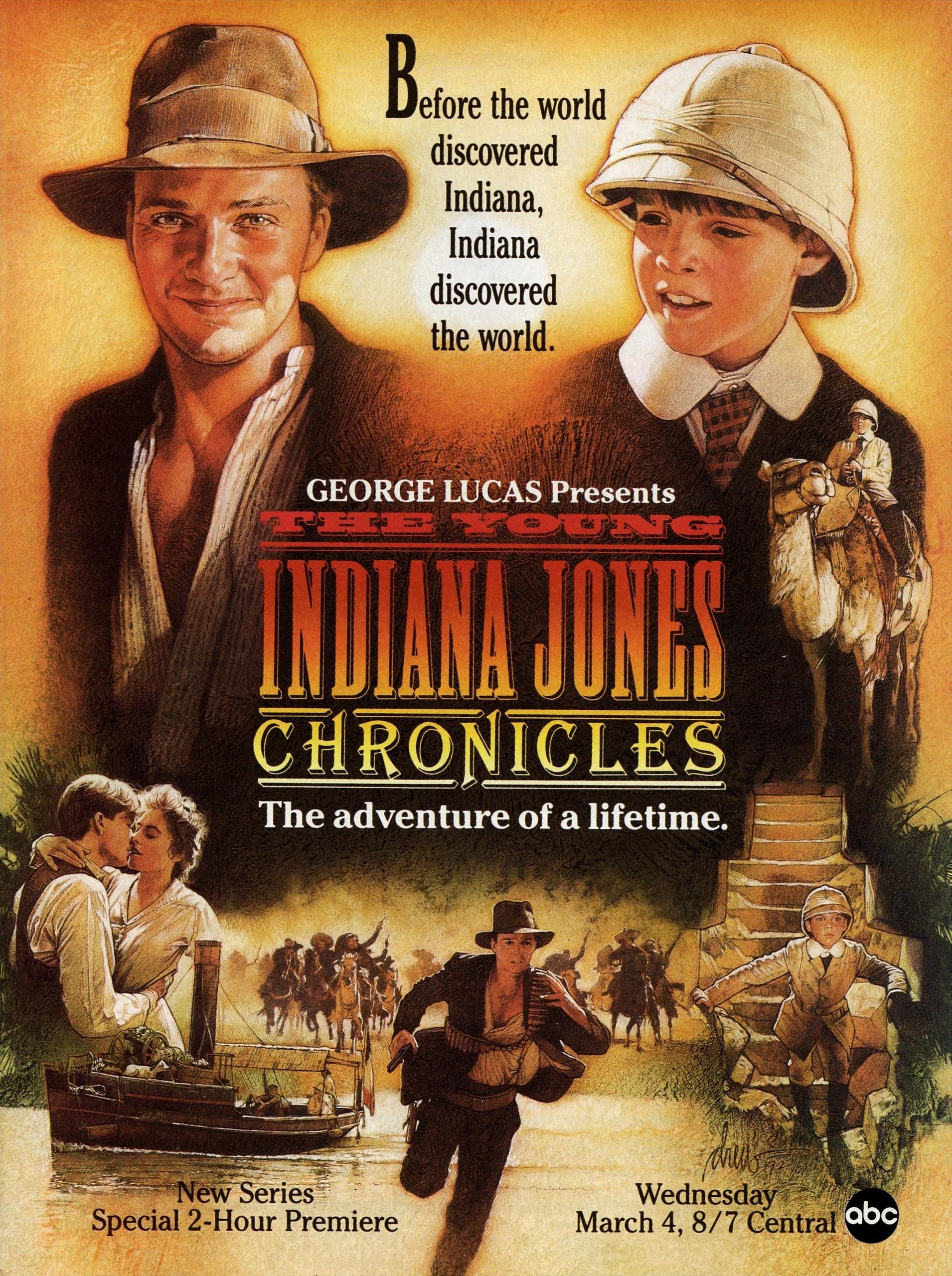
Starring: Sean Patrick Flanery, George Hall, and Corey Carrier
Grade: B-
When George Lucas creates something or is a part of cinematic greatness in any way, he usually goes all-in and tries to find any possible path to explore the concepts that are attributed to him, at least partially. The imaginative filmmaker looks for every avenue to try and expand on the initial story due to his passion for it, even if the success or reception of it is mixed. Audiences are well aware of how he continued to meddle with or add to Star Wars, turning it into the multimedia phenomenon that it was. Actually, we are still seeing the repercussions of it today. Not only with Disney’s ownership of the intellectual property but with how franchises in general have tried to follow the blueprint Lucas came up with. With Indiana Jones and his love for this particular concept, Lucas seemed to have a similar mindset. Instead of getting our wish of Indiana Jones sequels throughout the 1990s, fans of the beloved cinematic legend were instead treated to The Young Indiana Jones Chronicles, a big-budget action-adventure television show detailing the exploits of the protagonist in his early years. All of it was spearheaded by executive producer George Lucas who created the show and helped come up with a lot of the basic plots for the writing team to go off of. Regardless of what we have determined to be the final verdict of the show’s grade, this is not a George Lucas bashing session. He came up with the outline for the franchise, and his undying passion for the series may not be Star Wars level but it’s close, as evidenced in how detailed this TV series is. He wanted to continue the Indiana Jones series because he loved it. If they couldn’t secure Harrison Ford for a film sequel since he was one of the most in-demand A-Listers of the 1990s, this was the next best thing.
Would we have rather they just waited until he was available for a movie, so we didn’t have to sit through this? Absolutely, but here we are. At the same time, what else were they supposed to do? The creative minds of the franchise who were trying to keep the memory alive didn’t have much of a choice otherwise. It had to be a prequel series to maintain continuity and to avoid messing with the timeline of the movies, especially if they wanted it all to be canon. If you’re looking at the grand scheme of things in terms of continuity, it all works for the most part, with the exception of that pesky little detail of old Indy having a daughter, grandchildren, and great grandchildren (Peking, March 1910, Ireland April 1916, etc.). Obviously, this is much different than him only having a singular son in 2008’s Indiana Jones and the Kingdom of the Crystal Skull and no one other than Marion in Indiana Jones and the Dial of Destiny, but the positive is that it gives fans an out in case they don’t want to consider the show 100% canon. Nevertheless, this freeing thought process of the television show allowed for the writers to have carte blanche on whatever they wanted to do with the character without messing with what we love about the character in his prime. In the meantime, this show was made to satisfy audiences temporarily until everything aligned for a film to be made again. How were they supposed to know it was going to be another decade-and-a-half until Ford was free to make a sequel? This definitely wasn’t the plan going into it, and it’s hard to say if the show ultimately worked out, but that’s just how it happened.
The Young Indiana Jones Chronicles has a similar format from episode to episode. It starts with a 93-year-old Indiana Jones (Hall) in the present day interacting with the regular populace who have no idea who Jones is or what he has done in his life. With his eyepatch and glasses laid on top, the sweeter old man finds ways to tell his life story by his memory being jogged from what he sees in front of him. In one instance, Jones is at a donut shop. He sees a worker acting rude to some old lady, as the worker blames her for getting her own order wrong while arguing in his own defense that he had a bad day. Jones steps in to choke him with his cane to tell him a story about a real bad day, when he was fighting in the Belgian Army in World War I but was temporarily placed under Captain Moreau’s French command that eventually led to a lot of lives lost and himself being captured by German troops (Somme, Early August 1916). At the end of the episode, Jones is taken to jail for technically assaulting the guy, and it sets up the next episode where the story is continued. While in jail, he tells an inmate about his time when he was in a German prison camp and his many escaped attempts where he buddied up with a young Charles De Gaulle (Germany, Mid-August 1916). At the same time, other episodes could be as simple as Jones seeing young kids in a museum who don’t seem interested in history until he tells them a story from his past (Young Indiana Jones and the Curse of the Jackal). It may sound unrealistic that the older Jones opens and bookends each episode by trapping some poor random citizen in a 45 minute or so story in real time, but it’s actually fairly realistic when you think about how talkative old people in general are with strangers and how if you give them an inch, they will go a mile in referencing something from their past. It’s why Jones relating his interaction with a mail woman to when he led a daring spy mission into Austria to help aid Emperor Charles I during the Sixtus Affair and failing is a rambling conversation an old man would indeed have with an attractive stranger just trying to go about her workday (Austria, March 1917). Nevertheless, this is the format followed throughout each episode.
Sometimes, his anecdotes don’t even have a point, or he forgets why he brought it up entirely, which begs the question as to why they even did it (British East Africa, September 1909). It might be played up as amusing, but the joke doesn’t land. It just leaves the viewer perplexed at times as to how it all relates. Part of the confusion is the timeline being all over the place, as one episode will center on “Kid Indy” and the next four will be about “Young Adult Indy”. It just depends on what story they want to tell that episode. It’s hard to say if the non-linear approach is for everyone, as you find yourself groaning anytime you realize the next episode is a “Kid Indy” one. Because of this, in classic George Lucas fashion, he couldn’t leave this series as is either. Much like his reedits of Star Wars and THX 1138, Lucas had the entire series reedited into The Adventures of Young Indiana Jones, which consisted of 22 chronological feature-length episodes, with the “Old Indy” bookends removed entirely. It’s a completely different show because of this, so it’s not the one we reviewed here on Cinema Loco because it’s revisionist history that won’t be entertained. Come on, George. Stick to your guns.
Anyway, once the older Jones sets things up, the episode goes to the moment that he’s referring to. Depending on the story for that particular episode, the star is either Indiana Jones at the ages of 8-10 (Carrier) or when he’s at the ages of 16-21 (Flanery).
Being a massive Indiana Jones fan or at least Harrison Ford’s portrayal of the iconic character, a prequel is already a hard sell. Seeing other actors in the role never feels right, let alone seeing three different people portray the hero in question. Because of this, the worst of three is Corey Carrier. To be fair, the performance itself is solid. For a child actor, Carrier does a great job with what is asked of him. The problem isn’t with him. The problem is that we just don’t care. Adult fans that grew up with Indiana Jones in the 80s don’t want to see the adventures of an 8-year-old, and kids themselves will more than likely be bored with his “adventures” just as well. It’s not the fault of Carrier. You can only do so much with a young version of Jones. He’s not getting into fist fights or shootouts. It’s literally just him exploring and learning about different cultures. Now, this does help flesh out the character well because it explains how knowledgeable Ford’s Indy is, as he learns year-round from tutor Miss Helen Seymour (Margaret Tyzack) while traveling with his mother Anna (Ruth de Sosa) and college professor father Henry (Lloyd Owen) due to him guest lecturing all around the globe. Because of his unique situation and being lucky enough to travel to all these different countries due to Henry’s work, Jones picking up on all these different cultures, customs, and languages explains how well cultured and researched Jones is by the time the viewers see him in his prime. Nevertheless, the episodes with “Kid Indy” are the worst, and it’s not even close. The quality of the production isn’t bad in the slightest. It’s just uninteresting, oddly enough with the exception of Indy getting sick and eventually being saved by acupuncture in a random village deep into China (Peking, March 1910). With old Indy, it’s just jarring to see. For fans, it’s hard to conceptualize Jones in his 90s, but after watching the series in full, it works in terms of continuity better than I gave the show credit for, with hindsight being 20/20. The writers behind Indiana Jones and the Dial of Destiny may not have had The Young Indiana Jones Chronicles in mind, but it sort of works out as if they did. With Jones finally shedding away his cynicism due to his final adventure with Helena Shaw and reconnecting with the love of his life in Marion in the final minutes of Dial of Destiny, it’s presumed that the 80-something-year-old Jones is able to move on and enjoy his retirement age years.
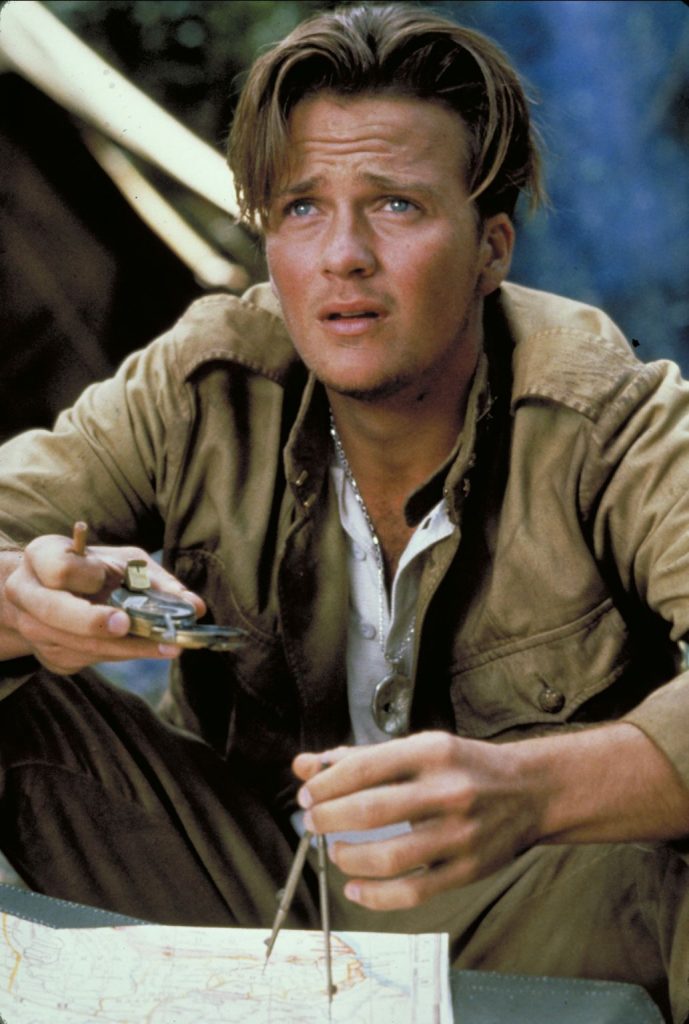
In The Young Indiana Jones Chronicles, the older Indy segments have the character’s age range from 93-94 in its seasons. The character being gracious in these older years and utilizing his day educating random people and lovingly talking about the past seamlessly aligns with the character arc Jones faces in Dial of Destiny and what is foreshadowed. So, credit goes to the writers of the final film because it all worked out. Whether it was intentional or not, George Hall’s portrayal of Indy’s final years on the planet technically bookended the saga as a whole rather seamlessly. That’s pretty cool, all things considered. Even so, it should be no one’s surprise that the brunt of The Young Indiana Jones Chronicles‘s entertainment and watchability factor is rested completely on the back of the adventures of “Young Adult Indy”, played by pre-Boondock Saints Sean Patrick Flanery and his immaculate 90s hairdo. As much as we want to hate this show’s existence, Flanery’s portrayal of the courageous, intelligent, sly, and good-hearted hero makes it nearly impossible. From fucking off and joining the Belgian Army under a fake name (London, May 1916) to befriending and learning jazz under Sidney Bechet (Young Indiana Jones and the Mystery of the Blues), Flanery depicts the nature of young Indy brilliantly to the point where we can see the skeletal outline of what he would eventually become at his peak.
Through no fault of the people in front of or behind the camera, the main problem with The Young Indiana Jones Chronicles is that it’s just not what we ultimately want. Everyone who begrudgingly tuned into the show because of the lack of Indiana Jones content in the 1990s were either superfans of the franchise or casual viewers that remembered how cool Harrison Ford was in the titular role. The show being better than what we may have given it credit for since we were watching it reluctantly in the first place is a plus, but the series only reminded viewers that as fun as the show can be, Ford isn’t there. When Ford isn’t there, the magic isn’t there either. It’s why an episode like “Young Indiana Jones and the Mystery of the Blues” is uneventful for the most part but also contains the arguably the best moment in the series, where Ford makes a one-off appearance to set up the story and we get to see the character in 1950 Wyoming during the wintertime donning a beard. The spark is evident as soon as Ford’s aura graces the screen, but then he pulls out a fucking clarinet and we get this ridiculous story about him being a huge fan of early 20th century jazz, despite it never being a topic of discussion previously. This goes along with the other major issue with the series, which is its unbelievability of circumstances. Though George Lucas utilizing the show as a partial history lesson for young viewers is a heartfelt idea, it puts Indiana Jones in the most random situations possible to meet about a thousand famous historical figures in time seemingly by chance, which would in effect make him either the luckiest person on the planet, an unlikable trust fund kid because his father being so successful put him on a path that no one could ever dream of, or “The Most Interesting Man in the World”, beating the Dos Equis guy. Just for Lucas to get his dream of this program being somewhat educational, we’re led to believe that Jones led the greatest life anyone has ever lived, ruining his mystique in the process just to make the two-season show look good.
Apparently by chance, Jones over time was able to become surprisingly good friends and pen pals with T.E. Lawrence (Young Indiana Jones and the Curse of the Jackal, Palestine, October 1917). Along with this, he meets a who’s who of some of the most famous people of the 20th century like Pablo Picasso (Barcelona, May 1917, Paris, September, 1908), filmmakers Erich von Stroheim and John Ford where they show Indy using the climb-under-the-moving-car-method years before the events of Raiders of the Lost Ark (Young Indiana Jones and the Hollywood Follies), Leo Tolstoy (Young Indiana Jones: Travels with Father), Winston Churchill (London, May 1916), Albert Schweitzer (Congo, January 1917), and countless others.
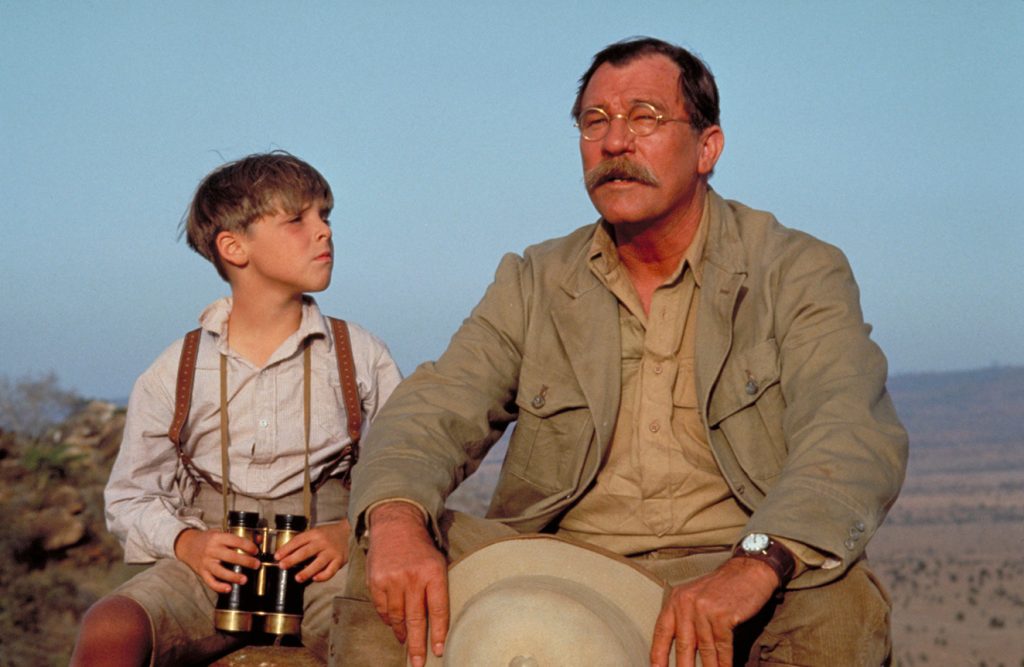
Apparently, Jones just happens to randomly run into all of them over his lifetime, pursuing a courtship with Princess Sophia of Austria-Hungary when he was 9 in “Vienna, November 1908” and later managing to have Eliot Ness as a college roommate in “Young Indiana Jones and the Mystery of the Blues“. Are we kidding? What? Then, when he gets older and becomes an archeologist and goes out of his way to have these expeditions in the movies, he doesn’t run into any famous figures? What, did his luck run out? This series didn’t “jump the shark” or “nuke the fridge” in Indiana Jones and the Kingdom of the Crystal Skull. No, it started with The Young Indiana Jones Chronicles. Jones nearly saving all of Austria (Austria, March 1917), running into a man who may or may not be the reincarnation of Vlad the Impaler/Dracula (Transylvania, January 1918), and running into Ernest Hemmimgway a few times in the span of a few years is about as believable as Jones surviving an atomic bomb in a lead-lined fridge at this point, so miss me with that shit. You either accept all of it or none of it. If the stretching of the believability of this character happened to this extent with this show, I don’t want to hear anyone coming for Crystal Skull, a movie that I will defend to my dying day. Regardless, this is just part of the gripes involved with the show and its existence. Another major issue stems from the fact that though the events of the program work within context of the series and explains how much life Jones has experienced at an early age, it devalues the efforts of the cinematic legend. Jones being this intelligent, resourceful, cool badass who makes things up as he goes suddenly becomes less cool in effect, as this show has the fans peek behind the curtain to see that he had a world of training beforehand and was much more prepared than he led on in the films. None of it was by chance. His entire life has been an adventure, so it’s almost like the events of the movies are merely another day at the office for Jones when the entire saga is taken into account. Considering the battles he went through from the ages of 16-21 in World War I, fighting alongside Pancho Villa (Young Indiana Jones and the Curse of the Jackal), nearly dying in the Congo (German East Africa, December 1916), and the countless life-threatening spy missions he took part in at such an early age, it takes the excitement out of the movies and lessens their impact.
This show didn’t help expand the Indiana Jones character. If anything, it hurt him. By demystifying his early life and making him a hero who risked his life thousands of times before he became the icon of heroism that he was as adult, it makes him less relatable, not as original or unique as he was portrayed to be because it was all learned behavior from opportunities and situations that no one in human history has ever been given, or it was flat-out taken from others, which was a big point of contention with the opening of the Last Crusade and only reaffirms my initial point of a prequel series never being needed in the first place. The TV show also takes away Jones’s biggest trait, making him that much less cool, with the program detailing how almost every awesome thing he did in the films or came up with on the spot during an action sequence happened years prior when he was a kid or young adult. This even includes his courage in general which should have never taken a hint as it’s a fundamental aspect of the character’s core. Nevertheless, this is apparently attributed to his high school girlfriend Nancy Stratemeyer in “Princeton, February 1916“. On top of that, it also makes Jones’s father Henry that much more unlikable. Though it’s implied that Henry severely downplayed his drawbacks as a father in the Last Crusade, none of us would think it was this bad. Henry paying less attention to a young Indy like how the movie characters explained he was would have been much more preferred than the show’s depiction of Henry, as here he is this egregiously strict parent who has an issue with virtually everything Jones says or does, another continuity issue between series and film that isn’t talked about enough. Henry is also very close with his wife Anna, even though this is yet another far off detail compared to how their relationship was described in the Last Crusade. On a near consistent basis, Henry becomes so unbearable that it undermines Sean Connery’s loving portrayal of the character that we had slightly more respect for. Coinciding with its finale, The Young Indiana Jones Chronicles hits its breaking point with Henry’s know-it-all demeanor in “Young Indiana Jones: Travels with Father“, after getting close to the bar several times beforehand.
All this show did other than let actor Lloyd Owen play a believable Connery-inspired Henry in his younger years, was vindicate Jones’s decision to not talk to him until the events of the Last Crusade. After Henry rebuffs Jones when he comes back from war and barely gives him eye contact when Jones opens his heart to him in the opening and bookending segments of the last episode while he fondly talks about a core memory he had when they almost died in Greece on the side of a mountain, I wouldn’t want to speak with Henry either. Henry took zero responsibility for literally anything and put it all on Jones, as if their relationship was strained simply because Jones didn’t bow down to every fucking thing this asshole said. The audacity Henry is depicted as having in this show is yet another reason as to why its existence effects the movies as much as it does. Besides this unfixable mistake, there’s the simple fact that there is only so much time on this planet and we didn’t get a single Indiana Jones movie between 1989’s Indiana Jones and the Last Crusade to 2008’s Indiana Jones and Kingdom of the Crystal Skull. It’s flat-out unfair, especially when the only thing the fans got in the meantime was this middling show and one singular appearance of Jones as the character in the entire 1990s for one of its episodes. On top of that, it was wasted on one of the most boring episodes of the series. Instead of getting Harrison Ford to kick some ass in his 40s and 50s on the big screen, we had to wait until he got into his 60s and 80s. You can see why that would be frustrating, which is why if I could trade this show’s existence for two more movie sequels starring Ford, it wouldn’t even be a question. In hindsight, I’m sure Ford would have loved to trade off Six Days, Seven Nights, Random Hearts, and What Lies Beneath for two surefire, money-making, Indiana Jones blockbusters to close out the 90s. As fans of the franchise and Ford himself, we sure as hell would have made that trade in a heartbeat.
The best episodes of The Young Indiana Jones Chronicles revolve around the protagonist’s time in the Belgian army and his years as a spy. It’s probably the series’ apex in terms of pure excitement, drama, and action. There is the two-episode arc of Jones rightfully defying General Joseph Joffre and realizing how difficult a position of leadership in the military is in “Verdun, September 1916” and “German East Africa, December 1916“, Jones’s first mission as a spy (Austria, March 1917), a fantastic World War I trench warfare episode (Somme, Early August 1916), Jones having another spy mission where he goes undercover at the ballet in one of the funnier episodes of the series (Barcelona, May 1917), Jones and Remy finding themselves in the middle of the Easter Rising insurrection (Ireland, April 1916), Jones finding himself helping an older crew of British officers during the war after taking the wrong train (Young Indiana Jones and the Phantom Train of Doom), Jones’s espionage mission in Turkey costing him his first marriage (Istanbul, September 1918), and Jones reuniting with T.E. Lawrence in Beersheba (Palestine, October 1917), With the four television films that accompanied the series as essentially elongated episodes, the best one is the search for the Peacock’s Eye diamond (Young Indiana Jones and the Treasure of the Peacock’s Eye). A distant second is Jones on another spy mission that gets him captured by the Red Baron in “Young Indiana Jones and the Attack of the Hawkmen“, as it does tend to drag in some areas, which effected its overall grade.
Additionally, if you really want to get frustrated to an obscene level, the screwball-like “Prague, August 1917” episode will make the audience’s blood boil in the guise of comedy. You may need to see it for that reason alone. They do a GREAT job at pissing off the viewer to no end.
For better or worse, fans and audiences alike have to treat The Young Indiana Jones Chronicles as canon, at least to the best of their ability. Its demystifying the Indiana Jones character to an unbelievable degree doesn’t ruin the character outright but it does major damage. Again, instead of Jones being the cool, relatable badass who makes stuff up as he goes along, the television series serves to show that Jones is only able to be who he is by living the most implausible, far-fetched life that anyone who has ever lived, as he was lucky enough to get world experience that no person in world history has ever gotten. It does explain a lot but makes the character less accessible, undermining the cool factor of the character and franchise as a whole. When one takes the TV show into account and sees firsthand what he went through in his earlier life, it forces the viewer and the fans to take a second look at the movies and realize that the bad guys never really stood a chance because they were apparently facing one of the greatest and most impressive human beings to ever live. Do you see why what we’re saying? The budget is utilized well, the lore is well-written, and the acting and action to a degree is great, but it lessens the power of the movies by showing us how the sausage is made. After watching it, the effects of the well-intentioned but entirely unnecessary show are basically irreversible. Even if the overall quality is solid, the show not existing in general would have been preferred, as the lasting legacy of the films would have been strengthened because of it.


+ There are no comments
Add yours