
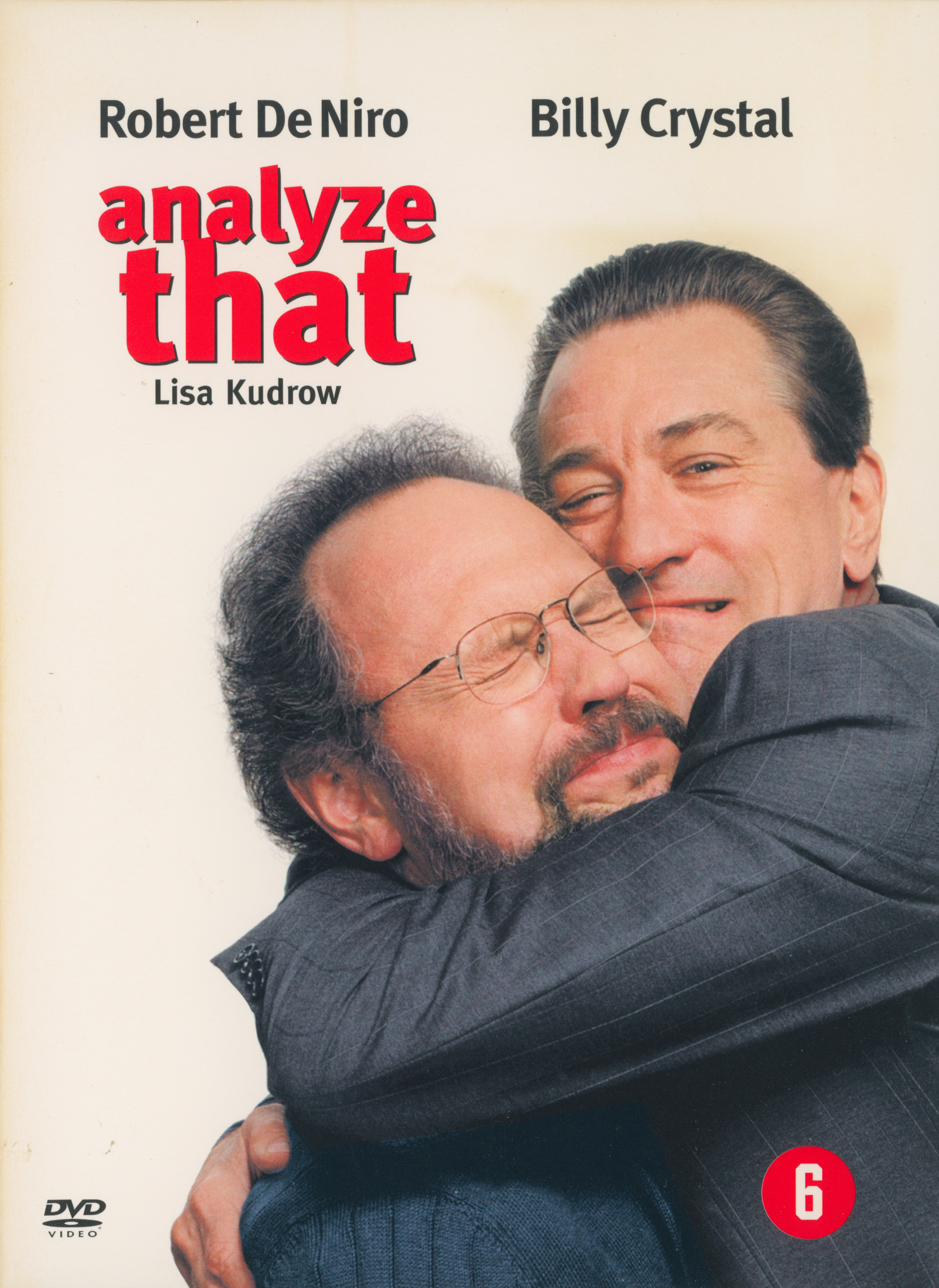
Starring: Robert De Niro, Billy Crystal, Lisa Kudrow, Joe Viterelli, Cathy Moriarty, and Joey Diaz
Grade: B-
The biggest problem with Analyze That is that we needed more Jelly. There was nowhere near enough Jelly considering how important Joe Viterelli was to the first movie.
Summary
In a strip club, Ducks (Diaz) is sitting with Caesar (Anthony LaPaglia) and asks how some unknown guy knew about the money and how he knew Tony Cisco got killed if they didn’t find out about it until that morning. Ducks assumes it was Peezee, but Caesar doesn’t think it was. Ducks questions who he thinks it is, and Caesar gets up from his chair, grabs Ducks’s face, and tells him he thinks Ducks did it. Ducks pleads his innocence, but Caesar has his boys shoot and kill Ducks.
This is just an episode of television program Little Caesar.
In prison, all the inmates are watching it on the break time, including Paul Vitti (De Niro). Unfortunately, Paul thinks its garbage and tells one of his guys to change the channel. Once the guy does, all the other inmates get pissed because they love the show, but they all calm down once Paul turns and stares at them. Having enough, Paul goes to bed and lets them watch what they want. Paul goes over to his cell and finds that his bunkmate is being transferred to another cell. He didn’t ask for the transfer because he’s friendly with Paul and the guard doesn’t know the details either when Paul questions it. Something is up, and he can tell. That night, a mobster disguised as a guard walks down the line and uses his silencer to shoot the bed of Paul. Thankfully, Paul saw it coming and was hiding under the bed. He just made it look like his body was in it so the assassin would think it’s him. Meanwhile, Dr. Ben Sobel (Crystal) is with his wife Laura (Kudrow) and son Michael (Kyle Sabihy) at Ben’s father’s funeral. Just as he’s asked to speak on behalf of his father, he has a daydream of calling his father out for being a son of a bitch and how he wishes he were alive so he could kill him himself. Then, he wakes up from the daydream when he’s actually asked to speak, though he’s interrupted by a phone call from Paul directly from prison. Despite it being in front of everyone, Ben takes the call. He explains to Paul that it’s a bad time because his father died, but Paul is pissed because he already left three messages. As Paul tries to explain someone’s trying to kill him, Ben hangs up since the entire service is watching him on the phone. Later, Paul is in the prison cafeteria and walks to his seat. A guard gives a prisoner a nod, so the prisoner antagonizes Paul until he comes over to him. The guy pulls out a knife, so Paul beats him with his lunch tray. With this, the entire cafeteria is thrown into a frenzy, and everyone is going crazy when the guards show up to detain him. Paul jumps on a table and starts singing songs from West Side Story before jumping into the guards, and they take him away.
Ben and his family get home, and they give him shit for criticizing his father in his speech, with Laura pointing out the “cold and withholding” line as unnecessary. He admits he strayed away from his notes but passes it off as him grieving. Once they walk into the house, FBI Agent Miller (James Biberi) and Special Agent Cerrone (Callie Thorne) are inside waiting for them because the housekeeper let them in. They are aware of them just coming back from a funeral and offer condolences. Ben gets sidetracked talking about it after Cerrone speaks to him directly because she’s ridiculously hot. They note that Ben got a phone call from Paul, and he denies it until they say they monitor all phone calls from Sing Sing. Laura is angry because Ben didn’t tell her that it was Paul on the phone but told the agents immediately, so she excuses herself from the conversation. Before she leaves, she tells Cerrone to wear a pants suit next time. Next, they ask for further details, so Ben gives a basic explanation of the events from Analyze This, boiling it down to saying they were involved in organized crime, but it was more Paul than him. It’s an awkward explanation, so Ben corrects it and adds that he was treating Paul therapeutically. Then, some people tried to kill them, though he insists it was nothing. Miller says that shortly after Ben spoke to him, Paul had some sort of breakdown. Following this, Ben is in Sing Sing to check on Paul and is placed behind a double mirrored window. Inside the holding room is Paul still singing songs from West Side Story. The doctor says he’s been treating Paul with Thorazine. Ben goes inside to talk to Paul, and he won’t look in Ben’s direction until he refers to him as “Tony”. He starts calling Ben “Maria” excitedly and makes him promise to get him out of there, so Ben does. After this, they are in an examiner’s room and Paul is completely catatonic. According to the doctor, this is how it’s been lately. Paul will sing like crazy and then switch to being catatonic. There aren’t any tumors, seizures, or strokes. Ben messes with Paul’s face and whispers to him that he will know if Paul is faking it. With this, he slaps Paul across the face. He tells the doctor that when he was a resident, they used to play with the catatonics. He starts imitating Curly from The Three Stooges near Paul and says he doesn’t think Paul is faking it because he’s not smart enough. As he says this, he gets behind Paul and yelps into his ear, though Paul doesn’t budge.
Ben grabs a needle with saline and tries to test him by injecting him with the needle. If he’s truly catatonic, he shouldn’t feel a thing. He stabs him in the thigh with it, but Paul doesn’t react. Ben takes it at face value and tells the doctor that when Paul comes out of this, he wants to do some neuro-psychological testing. Ben starts barking at Paul, but there’s still no response. Next, Ben administers some tests to assess Paul’s mental condition. When he asks if he has Paul’s consent to share the results of his test, Paul responds by saying his mother is mad at him because he took a shit on a rug. Ben takes this as a confirmation. Ben starts showing Paul inkblots and asks what he sees. The first picture, he sees a bat or a weasel or a bat-weasel. Ben wonders if he sees anything else, so Paul says he sees a pussy with teeth. The next test has Paul recreate a picture with physical objects of a colored square made up of different blocks. Despite the relative easiness of the objective, it takes Paul 1 hour and 12 minutes. The last test is Ben showing a picture of a mother in bed and her child is sleeping next to her. The father is standing nearby. He asks Paul what he sees, and Paul talks about how this hardworking guy came home to see his wife fucking a midget. Following this, Ben meets with Agent Chapin (John Finn) to discuss his findings. Ben refers to it as “Brief Psychotic Disorder”. If it persists, it can turn into Schizophreniform Disorder, which Dr. Kassam concurred with. Paul is crazy, but Ben doesn’t think its permanent. He points out how prolonged exposure to extremely stressful situations can produce a temporary psychotic state. It could last possibly only a month if the precipitating stresses are removed. Chapin concludes that Paul won’t get any better if he stays in prison, which Ben confirms and adds that he could get worse. Ben tells Chapin that Paul thinks someone is trying to kill him. He could deteriorate to the point where he’s permanently schizophrenic. Chapin notes how this is a real problem for Paul because he goes in front of the parole board in 4 weeks.
They both know they won’t release Paul in his current state, so Ben suggests he get released to a halfway house or a treatment center where he can get the care he needs. Ben brings up his previous treatment of Paul and is confident in telling Chapin that he doesn’t think Paul is dangerous and he’s made a strong effort to reform himself. With this, Chapin says he’s going to release Paul into Ben’s custody. Naturally, Ben is vehemently against this for a variety of reasons, but Chapin counters with bringing up how he can end up killed in prison or sent to a facility for the criminally insane. Of course, Ben doesn’t want to see this happen to Paul, but he’s still not cool with this. Chapin goes on about how he’s going to talk to the Bureau of Prisons to get Ben certified as a temporary federal institution. Ben still tries to plead with him, but Chapin ignores his requests and tells him he’s got 30 days to get Paul into shape for his parole hearing. This means sane, sober, and gainfully employed. If he screws up or flees, or if Chapin finds out that this was all a setup to get Paul back on the street, he will hold Ben responsible. He will be stripped of his license and will be prosecuted to the full extent of the law. He asks once again if Ben wants Paul or not, and Ben agrees to take him in. Soon after, Ben takes Paul to the car, and they drive away. Following a little bit of driving, Paul immediately switches back to his regular self and starts cussing out Ben for hanging up on him when someone was trying to kill him in prison. He faked the whole thing to get out. They argue back and forth until Ben finally asks who’s trying to kill him. Paul isn’t sure. It could be his old crew, the Rigazzis, or even Lou the Wrench (Frank Gio). Right now, the Feds are putting a lot of pressure on everybody, and the families are at war. Paul refers to it as the “Fall of the Roman Empire”. They knew Paul was getting out soon, so the last thing they want is for him to get into it on either side. Ben questions why he can’t say he’s just moving on and starting a new life, but Paul knows that it doesn’t work like that and is positive no one is happy he’s getting out.
They pull up to the house and Ben asks Paul if he’s going to grab his stuff, but Paul says he’s going to leave it there because Jelly (Viterelli) is going to pick him up in an hour. Ben isn’t having it. He points out how Paul is in his custody. He is to stay at the house and go through therapy every day, and he can’t leave without permission. He even threatens to make a phone call when Paul protests. Paul is pissed but is forced to go along with it, so he tells Ben to grab his bags. Miller and Cerrone meet with Chapin, and they all kind of agree that Paul isn’t crazy, but he’s of no use to them if he’s locked up. However, Chapin argues that if he’s back on the street, he has enough cache to be a threat to both families. Miller adds that it can only happen if he goes back to his old life. Chapin isn’t worried though. He knows people like Paul don’t change, pointing out how he’s been a menace to society since he was 12. Being a criminal is all he knows. The Feds are confident Paul will be right back in the thick of things. That night, Laura is angry with Ben for bringing Paul home, and they argue while cleaning the dishes. She wonders why Paul couldn’t go home to his family, but Ben points out how they were sent to Ohio for protection purposes and how his life is being threatened. Laura points out how this puts their family at risk instead, but Ben assures her he didn’t want Paul there. They’re just stuck. Just then, Paul enters the room, and they change their tune and act like it’s a joy to see him. Paul brings up someone making coffee in a rude way and wonders what the holdup is, so Laura tells Ben to make it and leaves the room. Next, Paul tells Ben he’s having a friend over. Ben doesn’t want his “friend” to stay too late, so Paul calls him pussy-whipped for taking so much shit from Laura. Ben tries to protest, but Paul goes upstairs and comments how he will be waiting for his coffee. That night, Paul bangs the shit out of his girlfriend and it’s loud enough that everyone can hear it. Ben and Laura can hear it, and Laura says she’s faking it. Miller and Cerrone are listening in from their van, and Cerrone says she’s faking it. Michael is listening in with headphones.
Finally, Ben goes over to Paul’s room to stop things. He brings a disgruntled Paul downstairs to talk and questions why he didn’t do this at a hotel, but Paul reminds him that Ben was the one who didn’t want him to leave the house. They argue back and forth until they hear Paul’s girl starting without him, prompting Paul to go back upstairs. The next day, Ben and his family host for the funeral, and Laura apologizes to Aunt Esther for not housing her because of an “unexpected houseguest”. Esther can’t help but mention that Ben’s father always had room for her family. Just then, they are interrupted by Paul’s girl arguing with Paul while she’s exiting. It turns into a loud screaming match, and Paul cusses her out as she leaves. He turns and sees everyone in the house staring at him, but he just goes over to the food. In the process, he flashes everyone as he closes up his robe and starts making rude comments until Ben takes him into his office. He sits Paul down and asks what his next step is going to be. Paul wants to find out who’s trying to kill him, but Ben wants to know what he’s going to do for work. Paul brings up how he likes to hit people with baseball bats, so Ben brings up sporting goods as an option. Next, he asks who Paul is. Paul refers to himself as “The Boss”, but Ben questions who or what he’s the boss of considering his current situation. Paul doesn’t appreciate his response and starts to get anxious. Ben explains how this is a natural reaction since he spent his whole life being the boss and now, he can’t be that anymore. If he’s not the boss, who is he? He asks what Paul wanted to be when he was a kid, and he tries to avoid answering it. After some minor pestering, Paul admits during a small window when he was around 6 or 7, he wanted to be a cowboy. He used to watch cowboy shows with his mother and father, his father bought him the whole cowboy outfit, took him to his uncle’s farm upstate, and led him around on a pony. Ben asks him why he never wanted to pursue it further, so Paul has to remind him that he joined a street gang at 12 in East Harlem. Ben brings up how this was the same age where Paul’s father was murdered, and Paul admits he thinks about it every day.
Paul asks what the correlation is, and Ben talks about how Paul’s father was the one who bought Paul the white cowboy hat. He was in the mob, but he wanted Paul to be the hero. Paul starts to weep, and he agrees with Ben that his father wanted a better life for him. He wanted Paul to go to college, but he hardly went to high school. Ben passes this off as his father not being there to guide him. Ben knows Paul refers to himself as “The Boss”, but when Ben looks at him, he sees the 12-year-old kid who’s scared and confused with a lot of hard choices to make. Paul has a breakthrough and sees what Ben is saying. He has a newfound excitement about figuring himself out, but Ben wants him to press the brakes a little bit and talk to a career counselor he knows to place him in a job. Paul is down for it. Suddenly, a rock is thrown through the window, and Ben yells at Paul to get down because he thinks it’s a gun. In reality, it’s Jelly. He just threw a rock through the window to get their attention. Ben goes outside to greet Jelly and is surprised he’s out of prison. Jelly explains how he got out because of a new trial, as the evidence of the first trial was tainted. Two of the witnesses decided not to testify and the third guy “committed suicide” by stabbing himself in the back four times and “threw himself off a bridge”. Later, Paul goes to a hangout spot with all the mobsters to greet Sally. They are all happy to see him, and Sally wants his help because the Rigazzis are walking all over them. Paul insists he’s out, but Sally wants him to at least think about it, so he agrees to. After this, Paul and Jelly go to Patti LoPresti’s (Moriarty) house. The doorman answers the door rudely, so Paul drops him with a punch and Jelly keeps his gun on the guy, so he doesn’t move. Paul walks into the house to talk to Patti who’s happy to see him. He gives his condolences over Carmine, and she appreciates it. Patti mentions how she lived with him for 21 years. Then, they pulled his torso out of a river, and it was hard for her. Paul isn’t buying it and implies she was the one who did it since that’s what all the talk was about. She passes this off as rumors. After yelling at her daughters Michelle and Theresa to get ready for ballet practice, she wants to know what Paul’s deal is. She knows Paul says he’s out, but she wonders if he’s going to try and take the family back from her. She assumes he won’t, and he concurs.
Next, Paul asks if she knows who’s trying to kill him, but she doesn’t and just talks about how things are going to happen unless they can end things with the Rigazzis. He asks directly if she had anything to do with it, and she denies it. She wants to be friends, possibly more. Paul cuts the bullshit and tells Patti that he just wants to be left alone. He’s focusing on himself and that’s it. She understands and offers him a cup of coffee, but he turns it down because he has a business meeting with some guy. Patti wants some kind of consideration if he gets something going, but Paul assures her it’s a legitimate thing. They depart on good terms. Once he’s gone though, Patti tells her doorman to watch Paul like a hawk and to shoot him in the head if he steps out of line. Following this, Paul tries his hand at working regular jobs. He tries being a car salesman but flips out on the couple he was talking to for an hour after they don’t but the car and want to “weigh their options”. After he lies to Ben and says it went well, he tries being a host at a restaurant. Following him threatening to slap the shit out of a customer, he lets the Yankees GM Joe Torre come to the front of the line and propositions him to win it all this year as it would be important to him personally. Mobster Joey (Paul Herman) walks in and greets Paul, and Paul has trouble admitting his job and just talks about how he’s on parole, as Joey is confused that Paul is doing such a lower-level task. He tries to go back to work, but he sees Joey talking to the guy he walked in with and they’re laughing at him. Later, Paul takes a picture with a table, and the guy asks for another round of drinks and bread, and he puts money in Paul’s suit pocket. Paul feels demeaned and grabs a piece of bread from another table and shoves it in the guy’s face. Sometime after, Paul is working at a jewelry store and is trying to sell a couple on an engagement ring. While they ask him questions, he daydreams about tying up the security guard, blacking out the cameras with spray paint, and blowing up the safe. With this, he just walks out.
Ben comes home to see Paul attempting to leave with Jelly, so he reminds Paul that he’s in his custody and they have therapy to do. However, Paul argues that the more they talk, the worse he gets. Paul adds that he had the same dream again. It’s not the one where he’s Mussolini either. It’s the other one where he’s 16, Ben is Sigmund Freud doing cocaine, Paul is scared out of his mind, giant versions of Patti and her crew are coming at him with guns, and he’s fighting them with swords. It’s what Ben refers to as the “limp sword dream”. Jelly doesn’t think he should be listening to this, so Paul tells him not to. Ben and Paul sit on the porch to discuss the dream further, and Paul is sure it’s not sexual because he was with Sheila (DonnaMarie Recco) last night and he had a major hard-on that he doesn’t mind telling Ben about. Regardless, sex can mean a lot of things and Ben sees the dream relating to performance anxiety. He knows Paul is under a lot of pressure because he’s changing his life and how he’s trying to find a job that fits him. Paul is already over the 9-5, as he can’t believe they take taxes out of his paycheck. He starts hyperventilating thinking about how awful the future could be, so Paul gives him a bag to breathe into. When he catches his breath, he blames Ben for the job-hunting issues because of how humiliating it is. Ben starts getting mad because he’s trying his best and tells him to get someone else to help him if he doesn’t like it. He calls Paul a selfish son of a bitch before adding that he didn’t ask to be born. Ben gets emotional and starts breathing hard, so he grabs the bag from Paul to breathe into. Paul wonders what the hell is going on, and Ben explains that he’s grieving still. It’s a process. Paul grabs the bag back because he’s the patient. At the same time, Ben takes a prescription medication of Echinacea and goldenseal.
Changing the subject, Ben asks Paul if he knows the show Little Caesar. Once he confirms he does, Ben brings up how a mutual friend told the producer of the show Raoul Berman (Reg Rogers) that Ben knows Paul. With this, Raoul called Ben this morning because he would like to meet Paul. He doesn’t know why, but soon after, Paul is asked to be a consultant on the show to add to its realism. Unfortunately for Paul, this will only be temporary, as the real mafia still has eyes on him.
My Thoughts:
Analyze That tries to recapture the magic of the first movie with a decent premise and the return of the original cast and director. Though it does succeed in some regard with the humor, the ever-present chemistry between the leads, and a lot of humorous scenarios the characters find themselves in, the second half of the film is a major drop-off from the first, generating questions of if they truly had the entire story realized before they started filming. It’s not bad per say, but the narrative goes down an underwhelming path to the finish line, leaving the viewer with a bland outlook on the overall film. It’s unfair really because Analyze That starts off hot.
Sadly, the flame burns out.
Let it be known that the problem is not with the cast. Led by a game Robert De Niro and Billy Crystal, the amusing conversations and arguments between them, and the full understanding of their characters within the foundation they laid in Analyze This is very much present. They don’t miss a beat, and De Niro particularly shines as Paul Vitti, with the character trying his best to shed his hardened outer shell to remove himself from the mafia lifestyle and attitude and assimilate into legitimacy. As you would expect, a lot of the best parts of the movie is Paul trying to be a working man but having a difficulty dealing with normal people. Watching him try to work a 9-5 is funny like his attempt at being a car salesman. Besides this, him and Ben being at odds doesn’t get old. You can see it coming a mile away, but as soon as Paul finally breaks character from his “crazy” state to yell at Ben, it’s funny as hell. It gives the amusing and welcomed aura of “Here we go again with these two”, and we’re right back where we left off. The psychiatric sessions aren’t as entertaining as they were in the first movie, but what does work is the development of their friendship this time around and how they speak to each other as a result. Ben is much more comfortable giving Paul shit rather than being scared of him and backtracking, and rightfully so as their friendship should progress in this direction. At the same time, Paul understands Ben a lot more and sees his vulnerabilities, using it to manipulate him at times. For example, his words of encouragement to Ben over his acting skill that leads to Ben being in a scene for Little Caesar is hilarious, as well as the scene after when Paul does it again and Ben falls for it (“Second take was better than the first. Jelly wasn’t giving me much honestly so…screw you, Paul!”). Paul is just as harsh with his words as before and it’s the brunt of the movie’s humor. His inability to be low-key is still just as funny as before like when he’s banging his girlfriend and Ben brings up how he has a 17-year-old son in Michael to stop Paul. Paul doesn’t understand what he’s getting at and just goes, “I’ll ask her”, assuming Ben wants Paul’s girl to fuck Michael. These little jokes sprinkled throughout make the sequel worth it.
Though the crux of the first movie was Paul working out his personal problems, this sequel has Ben Sobel taking on this role more as, as most of the psychiatry elements are rooted back to him analyzing himself while still treating Paul somewhat over his struggles with change. As he hilariously roots everything back to “I’m grieving. It’s a process”, Ben realizes that his problems with his father, as opposed to Paul’s with his dad previously in Analyze This and bits and pieces of this sequel, are left unresolved following his recent passing. Did he want to be a therapist, or did he become one like his father to get his approval, which was something he never got? It’s these moments of privacy with Laura that leads him down this existential path, and it’s interesting character development for someone who was more or less a comedic sidekick previously. Unfortunately, it only whets the appetite for what Analyze That could be, and it doesn’t get much deeper.
The bonus of FBI Agents Miller and Cerrone came off as a missed opportunity. After their initial introduction and Laura being threatened by Cerrone’s obvious attractiveness, it felt like there was a subplot dangling there that wasn’t fully realized. Whether it’s Ben continuously stuttering over words in her presence or her befriending Laura in some way due to her proving herself on the job, something there deserved to be fleshed out in terms of story and humor. It’s strange that they would get such a spotlight upon their entrance into the story but play minor roles afterwards. The same could be said with Michael getting a job driving Paul around, and Ben flipping out over it because he thinks his son will be influenced by Paul’s criminal ways. This could have been a goldmine for the story to explore! Instead of a one-scene joke to lead Ben to the club where Paul is at to set up the elaborate ending, Michael working for Paul as soon as Paul gets the job on the set of Little Caesar, and making him a bigger part of Ben’s worries, would have been an excellent way to strengthen the screenplay and the interweaving of subplots and supporting characters. For instance, what if Patti saw Michael’s potential or assumes he’s a bigger part of the equation, and she tries to goad him into joining her, forcing a divide between Ben and Paul for Paul putting Michael into this situation? It could add to the tension as well as increase the role Patti plays in the screenplay, rather than having her play this background terror that doesn’t actually do anything by the time the movie ends. Michael liking the money or the intimidation factors of the mob life, while not realizing the bad part of it until he sees something he shouldn’t have like a murder or a kidnapping, could have been hysterical! It really makes you wonder how they didn’t think of stuff like this just to increase the excitement of the screenplay. You see how willing Michael was to take an oath to Paul over the secrecy of his job? How was there not more to this?
The action-filled ending was decent but notably subpar, doing a significantly worse job than the climax in Analyze This. These two films are at their best when they don’t try to tiptoe into a territory that they shouldn’t be in. They thrive with situational humor and quippy dialogue. The ending was too big for its own good. This sequel would have benefitted mightily had they noticed the humorous ways the rest of the cast could be included in the narrative to make it less predictable, strengthening the overall picture as a result. Lisa Kudrow is even less of a factor this time around than she was in the movie’s predecessor, and though the subplot of Paul getting asked to be a consultant for mafia television program Little Caesar is good, they don’t do anything special with it. Other than Australian actor Antony Bella arguing with Paul over realistic lines and getting his ass kicked, there’s nothing particularly memorable about this portion of the film, despite how much time it takes up. Really, it’s hard to say what would better suit the story. Should Paul kind of like being this technical advisor for the show and consider going Hollywood? He has the director by the balls, everyone is scared of him, he gets whatever he wants on set including a trailer, Jelly and all Paul’s boys practically run the place, and Paul is actively changing scripts on account of mafia accuracy. It becomes his own playground for the taking. Why wouldn’t the character want to find his way back to this or have any interest at all in it being a long-term career option for him? Maybe it would be too similar to De Niro’s Sam Rothstein in Casino and wouldn’t fit Paul Vitti, but if Paul does want to go straight and doesn’t like doing the 9-5 type of jobs, this career path falling into his lap seems like something he would be cool settling into. Sure, it’s almost predictable, but it would have been a better conclusion than what we got. The screenplay isn’t sure what to do with the Hollywood angle either. As by the end of the movie, Paul stays true to his word of moving on from his criminal life, but he doesn’t have a goal or potential avenue to take in sight. He had no interest in any of the jobs he had including the easy job he had with Little Caesar, so the question the viewer has by the credits roll is, “Okay, now what?”.
Maybe that would be a good title for a third film to complete the trilogy: Analyze What?
It’s hard to say if Patti was underutilized or uninteresting, but her role was unclear. When Ben talks about treating Paul for his chronic anxiety, antisocial personality disorder, and how he wants Paul to see the possibility of change, Pattis is mad over this and threatens him. The question is why? She didn’t want Paul in the picture at all and feels threatened by his return to civilian life, as he could potentially take over her operation. Wouldn’t she be all for his rehabilitation because it would ensure her safety as the leader of the family? Her motivation to threaten Ben doesn’t make sense. It was funny to see Ben get thrown in the car after getting groceries and telling Eddie to watch for the eggs on the bottom of the bag, only for Eddie to throw it on the ground, but the scene didn’t fit the narrative. Lou gave the movie virtually nothing, and Eddie (“He’s a fucking jerkoff”) becoming a major player in the third act was a contrived twist that didn’t have the impact intended with the decision. His underlings of Enormous Bobby and “Al Pacino” (because he looks like the actor) only gave us the one-off insult from Paul saying he looks just as much as Carol Burnett as he does Al Pacino. Well, there’s that and Ben saying, “Hi Carol!” after being thrown on the ground during the big meeting to set up the heist. That was funny. Other than that, the antagonistic side of things was weak. Considering the rather big key to the story is some unknown person trying to kill Paul, the revealing of things didn’t match the hype. It was a far cry from Chazz Palminteri in the first movie. This is why the third act felt lost. Considering the tone of the movie, the “swerve” regarding the armored truck gold heist was expected, as was Ben finally letting some aggression out. The moment was a typical one for comedies of this era. Though it had its moments in the heat of the action like Paul spouting off incredible math to Ben (“3.50 an ounce, 16 ounces to a pound, 90 pounds to a bar. Do the math”), it’s just not the finale we want it to be. No one is saying Analyze That needed to be a risk-taking madhouse of a sequel, but it did go through the motions in the last half hour or so. Again, with the great first half in mind, what followed was just disappointing.
Also, I’m not sure if this was intentional as a meta-joke or it just shows how simplistic Analyze This and Analyze That are, but there is literally no difference in the scripts between the Little Caesar segments and the movies themselves. For Paul to complain about the realism of the show is laughable, considering how the films have been tailored to be the exact same thing comparatively.
Still, Analyze That is entertaining, and its upbeat and simplistic approach makes it a breezy watch despite its shortcomings. The scene at the sushi restaurant with Ben mixing his couple of ibuprofen with alcohol and his face numbing was amusing, Paul and Jelly holding a would-be hitman over a bridge like the good old days (“You heard what you wanted to hear” – “I guess you got me there”), Raoul mistaking Patti for an actress playing a hooker and Paul telling him to not worry about offending her but gives advice to not start his car for a couple of weeks (“I’ll have Brian do it. He’s new. Brian, start my car. Now!”) and Paul stressing how strong his erection is by saying how he could hang towels on it and Jelly adding that “He’s built like a racehorse in that area” gets a lot of laughs. Plus, the double breakthrough Ben and Paul have together while they both get emotional was a great moment. Their cinematic bond as a team was solidified right there. Ben helped Paul immensely in the first movie, but Analyze That showed how Paul really did the same for Ben. They were meant to cross paths in life, and it’s a heartwarming conclusion that the story reaches unexpectedly. In addition, I liked the subtle moment between them on the bus following the climax. It was a great encapsulation of who they are as individuals and to each other. It’s a positive moment, but Ben immediately asks what Paul’s plan for the future is. Paul just stops him and asks, “Will you not let me enjoy this for five fucking minutes?”. The audience is always quick to ponder such things and ask for a resolution, but someone like Paul is reminding them to just enjoy the moment. Let it breathe.
That’s a good ideal to take home with you.
Despite what has been said, this was a world worth revisiting. A lot of the film shows that, and there are a lot of fun moments that make Analyze That an entertaining sequel. Though it goes without saying that this first movie was better, watching the two in succession on a weekend isn’t the worst thing in the world. It should be reiterated that Analyze This was what I considered to be a relatively harmless comedy as far as R-rated films go, but Analyze That goes even deeper into this aspect to the point where the first movie is now “edgier” in comparison. It’s weird how that works. We’re all a big fan of Harold Ramis’s work but because of this, the expectation was that this sequel had potential to be a tad zanier either in humor or general execution to set itself apart from the first. Sadly, it slowed itself to a near halt after a sprint, and that’s where it faltered. It became too harmless for its own good, which arguably could be a criticism of the first movie as well. Maybe Ramis and company just got softer than we expected in their old age. That’s okay though. This sequel still had its moments.




+ There are no comments
Add yours