
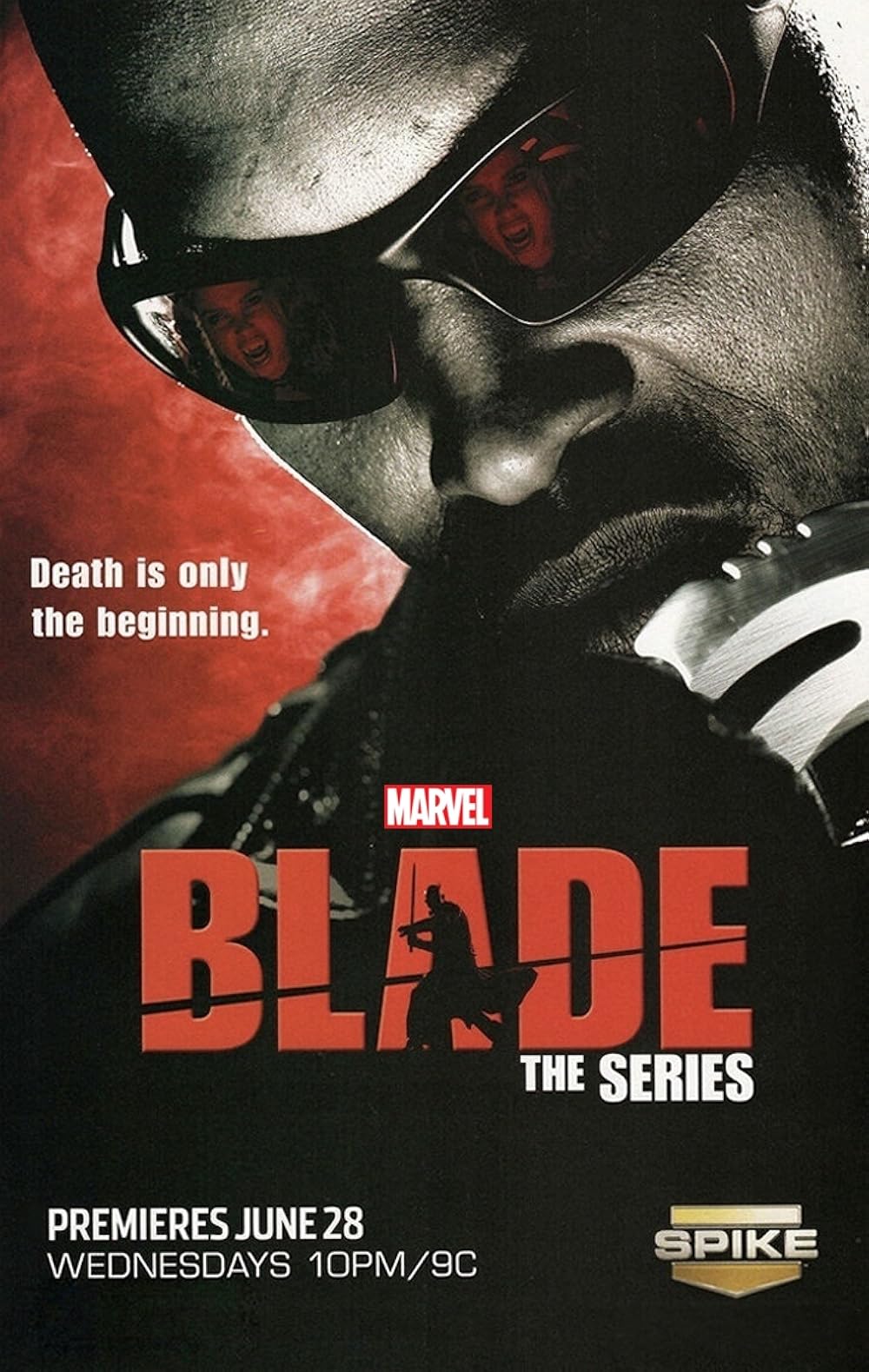
Starring: Sticky Fingaz, Jill Wagner, Neil Jackson, Jessica Gower, and Nelson Lee
Grade: C+
Even if Blade was finished for the time being in movie theaters, the decision was made to continue the franchise with a sequel series on Spike TV. Because of this and more than likely due to the troubling issues behind the scenes with Blade: Trinity, there was also a decision to move on from series star Wesley Snipes. It’s hard to say if it was his choice, their choice, or a mutual decision, but to be fair, it was rare for a star of Snipes’s caliber to make the move to television during this timeframe, even if the actor did make the superhero popular. Unfortunately, this is the sole issue that holds back Blade: The Series. Rapper Sticky Fingaz takes over the role and pales in comparison to the action hero that started it all. It’s a shame Snipes was too busy rolling out direct-to-video action movies and threatening to fight Joe Rogan in a sanctioned MMA match because the trajectory and overall quality of Blade: The Series could very well have survived and been one of Spike TV’s long-term successes had they managed to rope Snipes back into the signature leather getup of the legendary vampire hunter. However, the industry was in a much different place in the mid-2000s. Outside of this cataclysmic choice that effectively stops the show from reaching its ultimate potential, there is a surprising amount to like with the series. Funnily enough, and maybe the biggest problem with the series overall, the best parts of the show are everything not involving the titular superhero.
For better or worse, that should tell you everything you need to know about the program.
Since the series only lasted one season and annoyingly ends on a cliffhanger that was supposed to lead to the overarching story for Season Two, Blade: The Series works well as a limited series with a slow-building, developing narrative that does get better with each episode, and it really starts to click around “Sacrifice” where we finally get to wrap our head around the style of the show, how far they are willing to go, and the intriguing moral dilemmas the series is willing to bring to light in the midst of the comic book action. Admittedly, the show does take some getting used to. Along with some underwhelming “TV acting” performances, the transition to the new Blade’s style takes longer than we’d like in winning us over and still arguably doesn’t get there, and some of the production values of the series aren’t reflected in what its budget was reported to be. Then again, this is television after all. Without the backing of a major studio like how the movies were lucky enough to have, there is going to be an expected drop-off in quality that fans have to understand comes with moving to TV. The question is if there is a decent enough story to latch onto that overcomes certain production missteps. A great example of this is the RoboCop: Prime Directives miniseries. Certain elements of its style and acting were cheesy, but the story became engrossing enough with each episode that you were drawn in and couldn’t wait to see the finale by the time it was over. Once the audience allows itself to be a part of the ride and eases into how the series is telling its story, Blade: The Series has flashes of this type of engagement, as the supporting cast and the main story outside of the main character is quite strong. After the initial opening where Blade takes out a Russian soldier after hearing they are taking the bodies to Detroit on the word of Marcus van Schiver (Jackson), the central plot takes shape around Iraq War veteran and PTSD sufferer Sgt. Krista Starr (Wagner). Unbeknownst to the rest of the family, Krista’s brother Zack (David Kopp) is initially a “familiar” of Marcus but is later revealed to be working undercover with Blade to infiltrate the largest vampire colony in North America in the House of Chthon, one of the Twelve Houses within the vampire community (House of Chthon).
Sadly, Zack is killed almost as quickly as he’s introduced because Marcus has noticed his snooping around and correctly guesses his ulterior motives. The next day, Krista comes back home from Iraq, but the party turns sour once cops show up to tell them that Zack is dead. Since Zack was already known to his mom as a bit of a troublemaker, it’s assumed the report of him being shot and whatnot had no important context about it. Krista has always defended Zack and refuses to believe the investigating detective passing off the death as nothing more than the usual. Naturally, the detective, Brian Boone (Bill Mondy), is a familiar of Marcus and was already seen picking up hookers, robbing them, and feeding them to vampires in a barn. Krista sees the glyph on Zack’s neck, and this is a big enough clue to send her on her own detective mission. Boone says it’s a gang sign and points out how Krista hasn’t seen her twin brother in two years so things may have changed, but Krista is positive Zack wasn’t in a gang. After searching Zach’s apartment and seeing the unmistakable leather trench coat of Blade as he exits the building and she chases after but loses him, she steals Zack’s file from Boone after pulling the fire alarm at the police department and begins her investigation, leading her to uncovering the reality that vampires are real after learning of some details from Professor Caylo in a rare role for Randy Quaid where he plays it straight in a one-off. Had there been more seasons, there is no doubt in my mind Quaid would have been brought back in some capacity because this character was a lot of fun in his sole appearance as this nutty beacon of vampire information. For the record, the same can be said for Richard Roundtree as Blade’s human father (Sacrifice). After seeing the really well done flashback sequences of the episode and we get insight on what happened during the early years of Blade’s life when he was still just “Eric Brooks”, the viewer is let in on what his father had to go through to try and keep him fed with blood, while also trying to make sure his son doesn’t attack anyone.
Now, Blade fans know that Deacon Frost was revealed to be Blade’s actual father in the first movie. However, these flashback sequences fill in the cracks of Blade’s grade school years. It details when the thirst begins to take hold, and Blade’s human father watched over him since he was with Blade’s mother before her death and took the responsibility in watching over the young Eric. Usually, flashbacks are never done all that well in shows, but they do a great job at telling the story within the story of the episode. It gives us a newfound respect for Blade’s human father and allowing Roundtree to be given such an important role to play the father in his older years was excellent casting. However, Blade putting the blame on his father for not accepting him and even threatening to kill him at the end of the episode was so abrupt and without remorse, it makes us think there would have been an eventual reconciliation down the line in a future episode when it was time to develop Blade’s character arc more. Sadly, it will never come to fruition, and Roundtree was wasted, but it makes you think again about what could have been. Going along with the flashback sequence, Adrian Glynn McMorran’s brief role as the young Abraham Whistler was fantastic. He expertly depicted how the young Whistler may have acted and exudes the spirit of Kris Kristofferson. Plus, they get bonus points for showing that the limp he got was from a young Blade who kicked in his leg in their first meeting (Sacrifice). Bokeem Woodbine also gets a notable role in the show as Steppin’ Razor, the leader of the Bad Bloods street gang that took in Blade at a young age but were eventually turned because Blade bit them all. Even though his arc was stretched for a couple of episodes, this detour involving Razor was wildly uninteresting and learning about how Blade just stole some of his key traits from them just made him less cool (Bloodlines, Sacrifice). It almost undid all the other good parts about Blade’s backstory and just made the viewer want to see what Krista was up to, which should never be the case in a show about Blade.
One big part about the series pilot in “House of Chthon” is that they do a great job explaining why Blade can’t just continue to search and kill like the character did in the movies. Once they establish Marcus is responsible, Krista suggests they just take him out. When Blade says someone will simply replace Marcus, she makes it sound simple in that Blade should just take them out too. However, it’s not that simple anymore. This Blade is surprisingly done with his old school mindset, learning over the years as to why this approach hasn’t gotten them anywhere significant. Actually, this type of writing would have made sense for Wesley Snipes’s Blade, as he just seemed so much more in tune with his job. While centering himself with his timely meditation in-between kills and just seeming more intelligent in general, Snipes’s Blade would have gotten to this conclusion eventually. On the other hand, Sticky Fingaz’s Blade is written and performed more closely with how the old Blade approached everything, with a seek-and-destroy mentality with very little strategy involved. This new Blade doesn’t act like he has come to this smart decision, even if he does say it. Nevertheless, it’s explained by Blade’s new weaponsmith Shen (Lee) to Krista how they can track Marcus, and it will lead them to the House of Chthon, which will allow them to dive deeper into their organization to see what they are planning and how their operations work. It makes a great deal of sense in setting up the show’s overall story arc, which allows for Marcus van Schiver to flourish as a character and as the main villain. He’s a public figure in Detroit for restoring a dozen buildings from the late 1800s and is a local celebrity in a lot of ways, which seems problematic for a vampire who can live a long time, but these issues are never addressed. It’s more used as yet another reason as to why it’s difficult to kill him from the outset. It’s also revealed by Marcus that vampires don’t live forever like how people believe, but they do live a long time (Death Goes On).
Despite being a crucial detail to the world-building of the vampires in the Blade universe, this is never delved into further. The same can be said as to why Blade doesn’t find a summer jacket in place of his leather trench coat like how Shen suggests instead of Blade continuously bothering him to fix the AC in his car, though I digress…
Anyway, Blade reluctantly lets Krista in on the plan and gives her the responsibility of trying to put the tracker on Marcus at his gallery reopening, but Marcus sees her approach from a mile away and outs her as Zack’s sister after Krista tries to flirt and deceive him. She storms out after Marcus talks shit about Zack, she posts up at the building across the street, she sends a headset over to him to use, and they have a conversation while she looks for a clean shot with her sniper rifle. Krista lets him know too and has multiple opportunities to take him out on the steps in the midst of the crowd there. However, she hesitates, which allows for Chase (Gower) to take her out. Following this, they establish that the House of Chthon doesn’t bite if they can avoid it, as they are too high class for that. Using a syringe implanted in a gun, Marcus extracts his own blood, injects it into Krista, and then dumps her off a building to kill her. Once she reawakens in a morgue, she is recollected by Marcus’s group because she has officially been turned. Blade and Shen find out soon after, and this is where this Blade differs from the movie version. The movie version would have said whatever and moved on because he wouldn’t let this girl hold him back. However, the new Blade stubbornly tries to make this work by using his own serum on Krista before the thirst overcomes her by the next day. This world-building first episode “House of Chthlon” strongly sets up all the major developing storylines. Marcus shows that he’s willing to defy the House of Chthon by not getting permission to do certain things, Chase has suspicions of Krista while also becoming increasingly frustrated with Marcus showing favoritism to Krista, and Blade works harder than ever in trying to make his new team work while being a total dick to everyone. In a way, that does carry on from Blade: Trinity. In “Descent“, he also reiterates the main point of the series. When he explains to Krista why she needs to infiltrate rather than him because it would be too noisy, he doubles down on this partnership with, “I’ve been doing this a long time. I make a move, they counter it. They make a move, I react. It’s time to change the game. If I’m gonna keep them from winning this fight, I have to trust another human being. Just so happens she’s a vampire”.
It’s a great baseline, and what makes it all work is series standout Jill Wagner. The last thing I expected was for the host of Wipeout to be this shockingly good. Had this show came out today or had a longer lifespan in general, this should have made Wagner a major TV star rather than the plug-and-play actress for Hallmark that she currently is. Equally as sexy as she is a potential action heroine, Wagner shines above everyone in the main cast, including the series star. She makes Krista Starr a compelling enough character that her arc supersedes everything, as the viewer really doesn’t know how she will balance being both a vampire and working undercover for Blade, with the story taking a lot of twists and turns throughout its first season. The moral complexities Krista faces in realizing her powers could save her cancer-riddled mother and calling an audible by turning her mother to cure her, only to have to shoot her later because the thirst was satiated too much was an insanely entertaining episode that stretched the limits of the show and brought up a new problem not thought of before in the Blade universe (Turn of the Screw). Krista’s decision making isn’t selfish either. Her thought process still revolved around love and care for those around her, but it also shows why and how difficult these decisions could be for someone who is as loving as a Krista. This is why her emotions are played with after getting insight into how Marcus was turned, and she falls right into his hands, which nearly destroys Blade’s plans due to Krista being thirsty in more than one way (Angels and Demons). Though she makes questionable decisions like wanting to be “alone”, so she goes to a rave and drinks at the bar in “Angels and Demons“, she makes up for it with an overabundance of sexual tension between her and other series standout Chase, played by the sultry Jessica Gower. This is Spike TV after all, people. The teasing of something happening between these two probably helped sell the series to executives. Even so, we are not ashamed to admit that it WORKS. Even though Chase does not trust Krista whatsoever, part of it is rooted in jealousy because Marcus’s attention becomes diverted to Krista more than her.
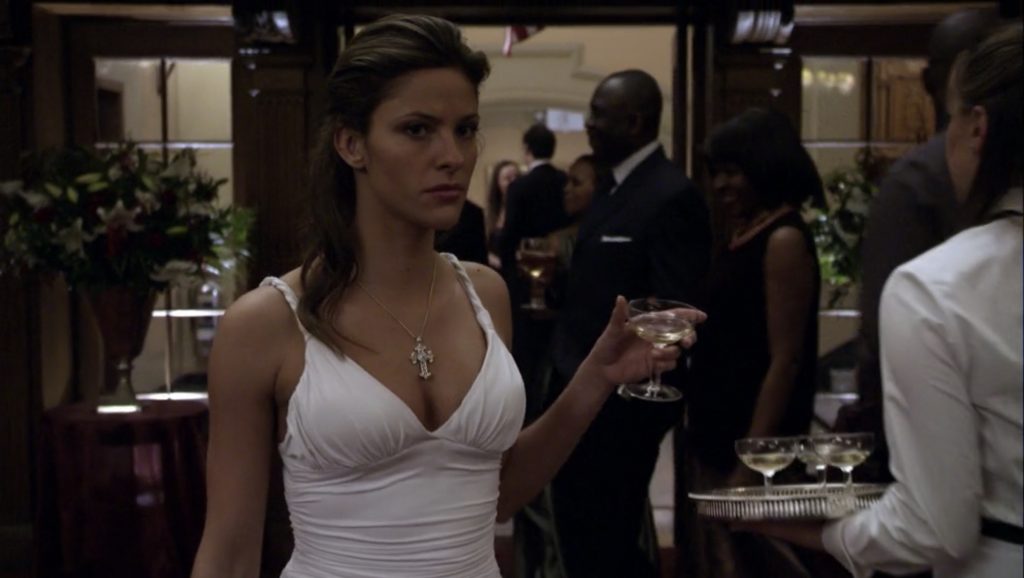
Though they do eventually throw hands in season finale “Conclave“, everything preceding it is a bunch of passive aggressive comments and a serious teasing of sexual tension between the two (Descent, Monsters). Chase is mesmerizing and diabolical. In one scene, we see her preying on addicts because they are the “ones no one will miss” in “Descent” while also fully falling for her just as Alex does all over again and is duped because of it in “Turn of the Screw“. Along with Jill Wagner, Gower steals nearly every scene she’s in because the viewer can’t take their eyes off her. How in the blue hell Marcus pulled both is the most unbelievable element to this entire show if we’re being honest. Even so, Chase’s growth in future seasons would have been something to look out for had they happened, considering how entertaining she was in the lone first season. With all of this being said, there is no conceivable reason as to how every vampire is dispatched rather easily and Chase somehow survives being blown up in a building (The Evil Within). By the time Krista throws her down that staircase and she hits everything on the way down (Conclave), you know she’s fine because she somehow survived being incinerated earlier in the show. Nothing outside of a stake to the heart could kill this freak.
On a side note, her relationship with ex-husband Frederick was fun development too, as Frederick’s softened vibe draws Chase’s ire merely by sight. I love how the House of Lycan are essentially the hippies of the vampire community, as it’s explained they have sworn off killing and only drink clone blood (Bloodlines). It’s yet another weirdly cool detail that shows how expansive the Blade universe can be when given ample time to present it. Truth be told, it’s world building within this season and all of its many new and exciting details on the vampire side of operations is significantly better than the three movies combined. Some of the highlights are the idea of newly turned vampires being able to see the other’s core memories that allows for a multitude of story possibilities that they capitalize on handily (The Evil Within, Turn of the Screw, Angels and Demons), the Lycan blood bath (Bloodlines), outlier vampires that the rest of the houses don’t associate with like the demented serial killer White Prince (Hunters), the differences between the Twelve Houses and the politics involved that are more captivating than they are in the movies, people being addicted to vampire ash to temporarily get vampire powers (Death Goes On), how people want to become familiars because it cures diseases and sicknesses on the spot, which was excellent reasoning that the movies could have benefitted from (Sacrifice), and the furthering of the purebloods and nonpurebloods not liking nor respecting one another as the hierarchy puts nonpurebloods at a forever disadvantage because everyone follows the set-in-place rules, or at least acts like it until Marcus decides to get his revenge (Turn of the Screw, Conclave). Granted, all of these positives regarding the vampire side of things came at the expense of Blade himself, as the series star never truly clicks alongside the cast who noticeably act circles around him.
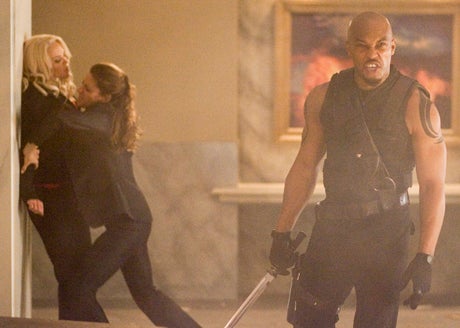
As a hip-hop fan who still appreciates Fredro Starr getting a cameo (Bloodlines), all of the main problems of Blade: The Series can be traced back to the casting of Sticky Fingaz. If we’re being honest, I highly doubt there was a major casting call to find the new Blade, and everyone was somehow floored with Fingaz’s audition. There’s just no way. His casting as the superhero had to have been a marketing thing. With such a major property being brought to television and without the star that made it famous, the series creators needed a name to carry the weight of the program so the drop wasn’t too steep. They didn’t want to go with an unknown actor and wanted to pick someone with some type of fanbase or credibility, which landed them with one of the rappers from Onyx. To some degree, the identity of the rap group does align with elements of Blade. Onyx is all about hardcore rap, aggression, fighting, intensity, and having trouble on the mind. Maybe, the thought was to go with Fingaz because of the content of his music and since he already has some acting experience along with it. It’s hard to say truly, but this is the only explanation I can come up with as to how he got the role. He speaks almost entirely in catchphrases or short quips until the last couple of episodes, he tries really hard to get his raspy voice to work within the character and overdoes it, he doesn’t possess 1/10th of the presence Snipes had in the role, and he’s not even in that good of shape. Nelsen Lee looks arguably better than Fingaz visibly, and he’s the sidekick. On top of that, the action and fight scenes involving Blade should be the calling card of the series. If the story is strong enough and all you have to do is put together some great fights that have Blade kicking vampire ass to fill in all the cracks, that’s a good problem to have because this is much easier to fix compared to narrative and character development issues. Shockingly, this is the weakest part of the series.
While Snipes looked natural in showcasing his real-life martial arts skills, Fingaz looked more like a rapper (which he is), trying to be an actor (which he is), trying to be an action star (which he is) in some sort of vanity project to prop himself up like Master P, though not nearly as egregious. In Sticky Fingaz’s defense, he’s a believable tough guy and fighter, but being a superhero like Blade is an entirely different animal. It requires a certain amount of skill, and a brooding demeanor that just exudes out of the hero with just a stare or the way he stands. A key trait of the superhero is that he’s a man of few words and all about action. A lot of the performance is carried by movie star aura and a key understanding of who the character is inside and out that Snipes just brought naturally to the role. Plus, he helped construct how the character was portrayed onscreen. Being only two years removed from the last movie, it’s too big of a difference in actors, and it’s a hard sell for the audience to buy into. Though Fingaz as an actor has a right to do his own take on Blade, it can’t be given a pass entirely. The show takes place after Blade: Trinity and is treated as a continuation of the franchise, so this is supposed to be the same Blade but with a bald head apparently. So, Sticky Fingaz is given the impossible task of trying to replicate as much as he can WHILE creating his own thing. Now, if this show happened ten years after the last movie and the fans were removed from the trilogy and more accepting of something new, the rapper may have been given less criticism because it would be entirely something different. However, being only two years removed the movies, and it’s supposed to continue the same timeline, it’s an unwinnable scenario. On top of that, Fingaz borrows the worst elements of Snipes’s performance and tunes them up to make it his, without understanding why the actor chose these certain performing decisions. With Snipes’s Blade, the superhero has a no-nonsense approach and has very little patience if any, with the latter being a major story detail of Blade: Trinity. With this film version of Blade however, there was still enough that he proved as a character and how he carried himself that you understood where he was coming from, taking his side as a result in a lot of the arguments that took place.
With Fingaz’s Blade, he doesn’t possess the same aura, he’s nowhere near as cool, and barely wins any major fight scene that he has. Actually, he has trouble with every vampire he comes across. In addition, none of the fights were anything to write home about either, a FAR cry from the trilogy. I still can’t believe how well they built up the White Prince as the scariest character in the show and botch the payoff as badly as they do in “Hunters“.
In the movies, Blade never looks this weak, as his vulnerabilities in a fight are saved for the main antagonist at the end of the movie and only shown slightly. Just as they said in Blade II, he is known as “The Boogeyman” in vampire circles because he’s that much of a terror to their kind. Blade: The Series utterly fails in continuing this legacy, as Fingaz doesn’t even enter the same stratosphere of exemplifying the bravado Snipes naturally had and with how the movies presented it. In the show, it’s commonplace for Fingaz’s Blade to barely get out by the skin of his teeth. There’s no way Snipes’s Blade gets beaten down like Fingaz’s Blade does with Bokeem Woodbine’s Steppin’ Razor (Sacrifice), Fritz (Death Goes On), or with the aforementioned White Prince (Hunters). There’s just no way. How did he even get shot like that by Chase (Death Goes On)? Why did he stop wearing the armor he was wearing in the movies? Surely after everything he’s experienced, Blade wouldn’t wear less armor as a result, right? The film version of Blade sure as hell wouldn’t have walked into that trap the Bad Bloods laid for him either (Bloodlines). That Blade was too experienced and way too intelligent to walk into something like that, but this Blade trusts and takes more chances. It’s just not who we know Blade to be, especially if this is supposed to be a continuation of the movies. Because of this, Fingaz’s Blade being such an unnecessary prick with guys like Shen makes him a groan to watch at times. Everyone bends over backwards to help him, and he just menacingly demands more. Snipes can do this and make it cool and even endearing. Fingaz just comes off as an asshole. You just want Shen to finally ask him, “Dude, what is your problem?”. It’s written unevenly and is performed unevenly. In one scene, Blade is yelling at Krista how they can still fight the thirst in “House of Chthon” while he sees her feeding on Boone and he shows genuine concern for Collins and wants to save him while he’s on his deathbed in “Monsters“.
In a wild contrast, Blade refuses to explain anything to a pregnant Vanessa and then punches her in “Delivery” and just demands more and more from Shen every time he sees him. Shit, I hope Blade pays Shen well with the way he treats him.
At least the new Blade gave the fans an innovative interrogation tactic by putting his sword between Caine’s legs. That would work! Even so, had Wesley Snipes decided to magically be a part of Blade: The Series in a perfect world, he may have been the missing piece to making it all work. That is how well the main cast does with the overarching narrative outside of Sticky Fingaz. Neil Jackson in particular is exceptional as the multilayered main antagonist of the series in Marcus. Yes, he is the bastard that ruins Krista’s life, but the writing and character arc is done well enough within its backstory and how they explain his motivations moving forward that you actually find yourself enjoying his path and role in the grand scheme of things. Where he takes the show is just as crucial to its positive elements as Jill Wagner’s Krista’s is. You find yourself even rooting for Marcus when he gets revenge on the bastard vampire that turned him on that fateful day in 1899 (Angels and Demons). This might be controversial, but I would even take it a step further and argue that Jackson’s Marcus van Schiver is the best villain of the Blade franchise. He is surely the most interesting. A close second might even by the creepy duo of Charlotte and Thorne, as anytime you have a vampire with the appearance of a child feed on a live human baby, it’s kind of hard to beat (Sacrifice). Killing Charlotte off was mistake, even if it did serve Marcus’s ultimate plan well. The character was too striking in appearance and performance to not be used in future seasons. Nevertheless, child actor Emily Hirst did a fantastic job in being one of the better villains in the series and her bitching out a grown man like Marcus was great to watch after seeing how he treats everyone else. Furthermore, her calling for her assistant Glynnis to do an internal audit of Marcus and the House of Chthon was a unique way to get to the bottom of things (The Evil Within). It’s hilarious to see how organized and professional the vampires are in the Blade franchise. It never gets old.
As far as the best episodes go, it cannot be stressed enough that things don’t start clicking into later in the season. The first banger is “Sacrifice” as it’s the first instance in the series where you appreciate the risks being taken in the writing. It picks a difficult scenario and goes through with it, begging the viewer to question how they would react given the same scenario. Besides this key turning point episode, there’s also the aftermath of Krista turning her mom (Turn of the Screw), the viewer getting a detailed flashback of why Marcus is who he is (Angels and Demons), the White Prince (Hunters), and Collins’s last stand (Monsters). The season finale was underwhelming to a degree (other than that genius torture scene where Krista has to torture Shen without blowing her cover), but “Bloodlines” makes up for it. The episode isn’t necessarily one of the show’s best, but Dr. Vonner telling a couple how their baby is healthy and then shooting himself in front of them after seeing Blade enter on the security cameras was the best opening of any episode in the series. You cannot open an episode better than that.
Gone but not forgotten, Blade: The Series had legs. Outside of Sticky Fingaz, the main cast did a phenomenal job. Jill Wagner shows massive star potential, Jessica Gower is a standout, and Neil Jackson deserves considerable praise for his role as the best villain in the Blade franchise. The main premise centered around Wagner’s Krista is very engaging and maintains a solid level of interest to keep things steady. Once enough sex and violence gets inserted in-between, it levels the show out and helps it work through its growing pains to finish strong by the end of its lone season. They had something here. Sadly, not being able to find a suitable replacement for Wesley Snipes in the property’s move to TV gave it a shelf life. Executives looked at the running clock in hopes that the show could succeed and overcome Sticky Fingaz’s underwhelming performance, but it upsettingly couldn’t. Realistically, it shouldn’t have either. As much praise as everyone else deserves, the show is supposed to be about Blade first and foremost. If the viewer is interested in everything BUT Blade as a character, something is unmistakenly wrong and it’s a problem that is unfixable.


+ There are no comments
Add yours