
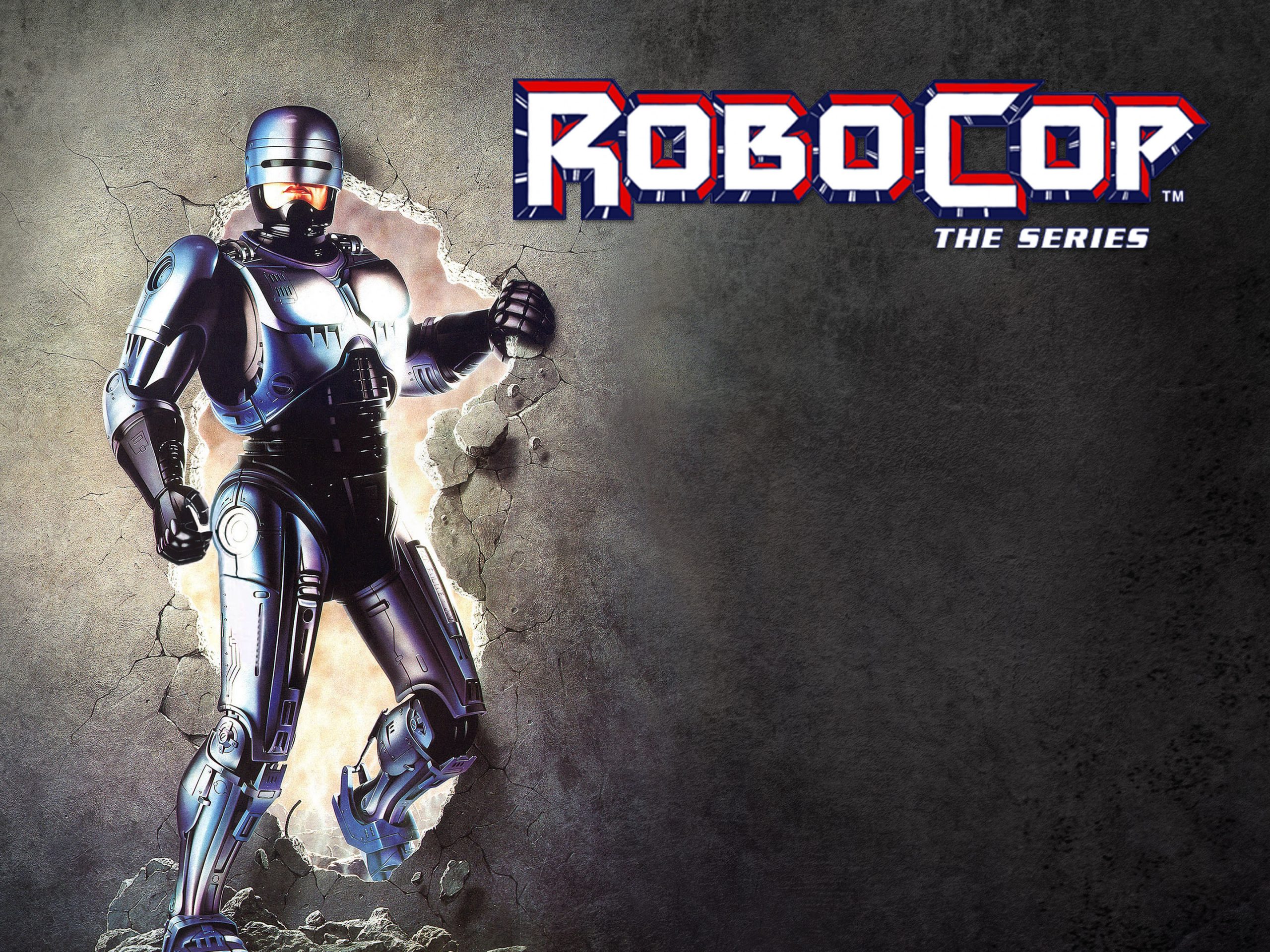
Starring: Richard Eden, Yvette Nipar, Blue Mankuma, David Gardner, Sarah Campbell, and Andrea Roth
Grade: D-
When the live-action show is more cartoonish than the animated programs, there is a problem.
A year after RoboCop 3‘s commercial and critical disappointment, the decision was made to continue the RoboCop franchise through television. Other than the 12-episode animated show from 1988, this was uncharted waters for the franchise, but the idea behind it was a solid one. They had a solid foundation of material to build upon regarding the futuristic world Alex Murphy finds himself in, and there was still plenty of room to grow to expand the series into something even greater. However, the changes were evident from the start, and they weren’t good ones. Continuing the same attitude of “Fuck it. We’ll do it our way” that the cartoon had six years prior, 1994’s RoboCop live-action television series disappoints for a variety of reasons. For starters, the tone is off. Part of the blame goes to Canada itself, as Orion Pictures apparently received a large sum of money to do business with Canada’s Skyvision Entertainment to make the show happen. The Canadian influence of family friendly welcomeness is a nice attribute of its citizenry, but it makes for awful TV, especially with a hardened American product like RoboCop. In my defense of RoboCop 3, I have said previously how though the film was further straying away from the vision of the first two movies, it wasn’t nearly as “family friendly” as critics made it out to be. It was rather a more science fiction action movie rather than the nuanced, ultraviolent satire the first movie was, which is fine. It’s a major contrast in styles, but RoboCop 3 being a full-on action movie involving a civil war between the people of Detroit and OCP with RoboCop caught in the middle was still solid popcorn entertainment for RoboCop fans, albeit cheesy at times. With this television show however, the producers dive head-first into the idea of making RoboCop a hero for the youth, complete with moments like Murphy telling kids to listen to their parents and how and why to do the right thing. It’s basically that section of RoboCop 2 when Juliette Faxx installed new programming into him after speaking with a focus group on how they can change RoboCop for the “better”, which essentially ruined his police work until he electrocuted it out of his system.
So basically, the worst part of RoboCop 2 is this show.
It tries to make both parties happy by still containing some hidden jokes, innuendo, and content for adults, but it just comes off as inappropriate for what they turned the show into, failing both audiences. Because on top of all this, it’s nowhere near enough to keep the attention of someone past the age of 14. They try to, as there’s still plenty of action sequences, cool explosions, stunt work, and some interesting plotlines Alex Murphy finds himself in the middle of, but it veers into PBS territory with how family-orientated it can be in its messages and content, which is why the show doesn’t even sniff its potential, despite getting an exorbitant budget to at least attempt to. There’s nothing against this type of childish programming in general as it can have success for the right crowd. However, when it comes to RoboCop and its fanbase that even allowed this show to be possible, it doesn’t live up to the expectations of ANY of the previous films. It’s as if the creators behind this show have never watched a single RoboCop movie in its entirety. Instead, they saw a still photograph of RoboCop himself, read a basic logline of the first movie, and just went ahead and created this live-action show. It takes the toy line marketing focus of RoboCop 3, throws in elements of Sesame Street and the Adam West-led Batman show from the 1960s, sprinkles bits and pieces of any run-of-the-mill police procedural from the 1990s, and throws in just enough Dick Tracy to make this befuddling, campy, one-season product look like it was made for the wrong crowd for a previous decade. Making a show about a futuristic Detroit with a cyborg star look outdated is almost impressive, but that’s what we’re dealing with here. In a decade where dramatic episodic television started to get darker, grimier, realistic, and daring in its portrayal of society at that point, the producers of 1994’s RoboCop decide to go in the opposite direction, choosing a 1980s or even 70s perspective of American life with a 90s look to the production. It doesn’t make sense and what is maddening about it all is that it could have been avoided entirely had they researched the franchise.
If any of them studied the heart of all the movies leading up to the show being greenlit, RoboCop could have fit seamlessly alongside the changing landscape of television at that time, especially shows revolving around cops. Considering the core of the first movie, there’s no reason why RoboCop could not have been NYPD Blue with a cyborg cop at the helm of it. The tone and material between the two are similar enough to where this could have been pulled off. Now, it may not have had the longevity of NYPD Blue because the production costs of RoboCop were through the roof and partially led to its early demise, but the point still stands. On the other hand, it’s understandable why studios may not have been overly willing to be as controversial as NYPD Blue, but if the history of RoboCop and its fanbase were taken into account, the show being a product similar to it would have fit the original vision of the character and allowed for the freedom of more compelling narratives fit of a crime-riddled Detroit. The show was screaming for mature content, but it’s obsessed with shoehorning the production into a modern version of the 1966 Batman program. From the pilot episode “The Future of Law Enforcement“, we learn right from the beginning that this isn’t the RoboCop we know and love. They set up his entrance perfectly, but then we see shortly after how they have bastardized the cyborg cop. It becomes evident minutes in that they have turned him into a Superman-like figure, meaning he doesn’t kill. He has the option for “Deadly force” in his programming but never uses it. Instead, Murphy finds tricky ways to stop bad guys, with one of his disappointing signature moves being him shooting the gun out of a criminal’s hand. Once he gets inside to start taking out bad guys, one guy blasts him with a shotgun a few times and Murphy just takes it, unflinching. Then, his response is to shoot out the leg of a dresser that falls onto the bad guy, and it apparently knocks him unconscious. Other moments have him use this charge that explodes into an inflatable barrier (What Money Can’t Buy, RoboCop vs Commander Cash). To say this is a far cry from the original movie and its main character is a colossal understatement.
At this point, you might as well give him a different name because this isn’t Alex Murphy nor RoboCop. This is RoboLawEnforcementOfficial.
Actually, even the 1988 animated version of RoboCop would kick this version of RoboCop’s ass. Despite it being a cartoon and everyone having laser guns, he still wouldn’t hesitate to shoot someone down. That’s how lame this version is. Maybe it’s a network thing, a sponsor thing, or a Canadian thing, but one big takeaway from this show is that every actual death involving gunfire only happens offscreen. Again, this isn’t RoboCop, let alone Detroit, Michigan in any era of time. Part of the appeal in the first place is RoboCop shooting to kill when the situation calls for it, as he faces some awful people in the franchise. Though his prime directives are always taking into account, he still finds a way to take out the villain when the time comes, whether a directive is removed through chicanery (RoboCop), he has to be reminded of his directives by someone else when his human side nearly overcomes it like in the series finale of 1988’s cartoon, he finds a way to free himself from the directives entirely (RoboCop 2), or he finds a middle ground (RoboCop 3). In the 1994 TV show, he just arrests whoever at the end and it ends on a happy note without question, EVERY SINGLE TIME. The heat is gone, and the suspense is nonexistent a few episodes in because the viewer can sense the routine the show settles into. By then, it doesn’t recover. If I wasn’t reviewing the entire franchise and forced myself to get through it, I would have stopped watching a few episodes in. It got that dry that quickly. For RoboCop fans who decide to tune in because they appreciate anything involving the main character, they will find themselves either bored or insulted throughout their viewing experience, guaranteed. There’s no way the Alex Murphy we have become accustomed to lets William Ray “Pudface” Morgan (James Kidnie) stay alive after the events of the first episode, let alone Dr. Cray Mallardo (Cliff De Young). Every time these over-the-top cartoonish villains reappear, you just can’t help but wonder why RoboCop doesn’t take them out for good, considering all we know about the character and franchise. It just doesn’t align with anything we know about him, and that’s the problem.
Again, with RoboCop 3, I made it clear that ultraviolence doesn’t need to make the film because if this gimmick is relied on that heavily and its lack of use for it determines the success of a RoboCop feature, then it wasn’t much of a movie to begin with. The civil war story was a good enough premise that Rated-R savagery wasn’t needed. Plus, the shootouts, fights, chases, and deaths were still bountiful. Let it be known that had the television show gone in this direction, I would have been fully on board with it. Moreover, it would be enough to retain RoboCop fans and viewers who love science fiction and action in film and television. Plus, it would be tame enough to bring in younger audiences and sell some toys. If they wanted to teeter the line and delve slightly into a more violent direction, the show could have found a middle ground somewhere between the styles of RoboCop 2 and 3, assuming that an NYPD Blue-inspired show akin to the first RoboCop is out of the question, despite how revolutionary it could have been if it was considered. Sadly, this was not the case, as there was a concerted effort to make this show as corny as humanly possible and make RoboCop the face of it, which only further affected his popularity with all audiences as a result, as it was too childish for adults, insulting for dedicated fans, and had too many adult details for too young of kids. At the same time, there wasn’t enough meat on the bones to keep a child’s attention for its slow-paced 45-minute episodes either. From the outset, the show sealed its fate. It couldn’t decide who it wanted to cater to, failed in all departments, and was so over-the-top that you’d be embarrassed to recommend it to someone because you would have to explain why it’s as campy as it is compared to the cooler and more fun movies. To go along with its kitschy style that is too excessive to entertain anyone remotely mature, all the performances from the main and recurring cast chew the scenery to shreds, ESPECIALLY the antagonists. It’s a comic book come to life with stage acting, and that is not a compliment.
For all the exciting moments where RoboCop has to diffuse a bomb (The Human Factor) or fail at it but survive (Provision 22), it’s still too painfully corny to even get there at times. For example, the best episode is arguably “The Human Factor” because the stakes get raised to where the villain is threatening to nuke all of Delta City. What’s “The Mad Bomber of Old Detroit” Felix Webber’s biggest motivation for blowing up the place and himself, you ask? He was fired from OCP for unauthorized researched on a hair growth serum. Now, he has a tattoo of a spider on his bald head, and he’s angry. Are you joking? Pudface wanting constant revenge makes sense because he looks like if Emil from the first RoboCop lived and forever remained a toxic waste monster, but Webber being that angry over baldness is asinine, though that’s par for the course for this show.
Sometimes, the larger-than-life approach can work for productions, but a lot has to go right to make it acceptable. From the actors to the set designers to the screenwriters to the director, everyone has to be committed and in on the joke. Only then can they make it work. However, there are enough normal characters in the show, and actors trying to make these basic, hokey, cliché, on-the-nose scripts and dialogue work, that the final product looks even more uneven because the divide is defined in bold. It’s hard to get your bearings when they try to throw in real detective work and discussions about gang influence (Zone Five), the dangers of consumerism (RoboCop vs Commander Cash) and exploitative television (Inside Crime), gambling (The Tin Man), orphans (Mother’s Day), sickly children (Officer Missing, What Money Can’t Buy), and welfare (Provision 22), and then randomly throw in an episode containing someone as obnoxiously silly as Mallardo, a magician (Illusions) or Pudface’s weird-looking henchman Shorty, as they try to take over the city or something. It doesn’t mix. Some of the elements land on the side of realism, and others are given direction to act like cartoon lunatics. The biggest example of this divide is Yvette Nipar as Alex Murphy’s partner Det. Lisa Madigan, the standout of the show. A beauty no doubt but also tough and cool in her own right, Nipar’s real acting and attempt at a multilayered performance throughout can be seen fighting through the cracks of the show. Nevertheless, the content, tone, and poor scripts persist and confine the actress, and it never allows the character to reach her full potential. She’s completely handcuffed to the direction of the show. Even with this being said, Madigan is the best and most entertaining partner Alex Murphy has ever been given in the franchise’s history. In just 21 episodes, Madigan wins over the audience more than Nancy Allen’s Anne Lewis did in three movies, blows the Anne Lewis from the cartoon out the water, Agent Nancy Miner from RoboCop: Alpha Commando, anyone in Prime Directives, and Michael K. Williams’s Jack Lewis from the remake.
It’s actually a good thing Madigan is a new character entirely instead of being a new version of Anne Lewis. Going about Nipar’s character this way allowed for her to have a blank slate and to fill the partner role her own way. In doing so, she nailed it and become an early favorite of the series. The viewer can’t help but get excited with how much is given to Madigan to make her worthy of her detective title, as her energy, fierceness in the face of opponents, and general motivation is infectious, especially in a show that moves at such a snail’s pace. Though she’s given a lot of stereotypical cop dialogue where she’s an eager maverick that argues with Sgt. Parks (Mankuma) over basic regulations that she should know by now, but she’s also a warming confidant and friend of Alex Murphy. Thankfully, they don’t tease anything romantic between the partners like they did with the 1988 cartoon or some of the strange line deliveries of Dr. Marie Lazarus in RoboCop 3 that implied things. Instead, the core of their relationship is a devotion to their jobs and how they are always there to back each other up. When RoboCop is accused of killing a televangelist in “Prime Suspect“, the evidence is damning. The murder weapon is his gun, it can only be activated by his programming, he was offline during the timeframe the man was murdered, and he refuses to disclose his alibi because of his directives. However, Madigan knows the real Murphy and would stake her life on him telling the truth to the point where she helps him escape the courtroom by acting as if she were his hostage. She’s a partner and a great friend, and the added bonus of her being friends with Murphy’s wife Nancy (Jennifer Griffin) is an intriguing plot development they play with a lot. With Madigan, she’s feisty and has a lot of personality to show. It’s more than any of Murphy’s partners before or since, but she doesn’t win us over because everyone else did such a poor job. It’s because Yvette Nipar did a great job with what was given. This is why “Nano” is simultaneously Nipar’s best performance but also the worst episode of the series. To open the episode, she commandeers a bus controlled by nanobots and tries to stop it. Unfortunately, she crashes and becomes paralyzed from the neck down.
It’s emotionally devastating, and Yipar’s performance as Madigan as she realizes what has happened to her, questions aloud the uncertainty of her life moving forward, and the grief she goes through in the episode is fantastic work.
It’s devastating to the viewer too because you can’t help but take it at face value. This is something you do when you write a character off a show or completely change it. Does she volunteer for a RoboCop-like procedure because she doesn’t want this life and it’s the only option? Does she die? Does she become something similar to Lincoln Rhyme in The Bone Collector? I suppose she could, but is that something we really want to see for a character who’s this important to the energy and entertainment value of the entire show? This is a series finale or season finale type of episode because it’s such a permanent decision. Taking the audience through such a whirlwind of emotions and making them suffer through such a catastrophic and draining situation has to have a program-changing follow-up to make sense of it all, right? No, the entire episode is a cop out. Just like how RoboCop continues to skate by and solve things rather easily without little harm done in every episode, not even the paralysis of his friend can stop the show from following the same routine. By the end of “Nano“, they use the technology of nanobots from the revolutionary doctor of that episode to repair her spine in an experimental surgery, and she’s back on duty the next day ready to stop a sniper. If this isn’t a slap in the face, I don’t know what is. To begin with, if this program is supposed to be somewhat family-oriented, how in the world does this episode constitute as appropriate? How do you explain the possibility of this to a child or the realism surrounding it? From a writing perspective, how do you miss the potential goldmine of character development and drama that could come from this? You could have a three-episode arc on the fallout of her almost life-altering injury with ease. Madigan could deal with PTSD in the same manner Murphy does regarding his old life, she could have trouble deciding whether she should continue being a cop considering the danger involved, and she could even try a desk job out for a bit. There could even be some humor involved in an episode where Madigan attempts a series of odd jobs before inevitably failing at all of them until she goes back to the force.
There was so much that could be done with such an overwhelming plotline like being paralyzed from a car crash from the neck down. Nevertheless, they cross the line into absurdity by wrapping that up in a single episode too. At that point, how far can you really go before the viewer stops suspending their disbelief? Episodes and moments like these can lose the interest of an audience in a heartbeat. If they didn’t leave by the first three episodes after seeing what happened to the franchise in the first place, the last of the viewers will be gone by “Nano“. By the way, this is coming from a very patient fan, so it pains me to say it. The other idiotic episode is “Officer Missing“. To be fair, most of the episode works great in humanizing the OCP Chairman (Gardner) and making him a sympathetic character rather than the despot the Old Man was from the films, but what sticks out is their choice of villains for that episode. They are called the “Stompers”, a group of guys who are either pirates or Civil War reenactors with outlandish pirate accents. I legitimately can’t tell. Why they talk or dress like this is never explained. In the same show, the parents the Chairman and Murphy help out look like chimney sweeps from the 1930s, so it’s just another addition to the list of asinine decisions this show makes. Speaking of which, Diana Powers (Roth) is the worst character in the show because her existence ruins what little credibility to realism RoboCop has left. She’s introduced in the pilot as a bumbling secretary with morals and a slight attitude but is professional for the most part. However, she’s murdered and her brain is used to power NeuroBrain, an OCP project that runs through all OCP products throughout Delta City and Old Detroit. She becomes a living computer program because of this, but that’s not all. In the most perplexing move of the series, Diana also turns into an omniscient presence that can show up anywhere like a ghost hologram and has a completely different personality than what she had when she was alive, which is an awfully noticeable inconsistency. Moving forward, this ghost-like presence acts as an angel on RoboCop’s shoulder, gives advice, and also works as a storytelling device that steps in to essentially save the day any time the screenwriters write the story directly into a wall (Prime Suspect).
With her basically becoming a demigod, RoboCop never losing, and Madigan managing to beat paralysis, there is no excuse for this team to ever lose a fight.
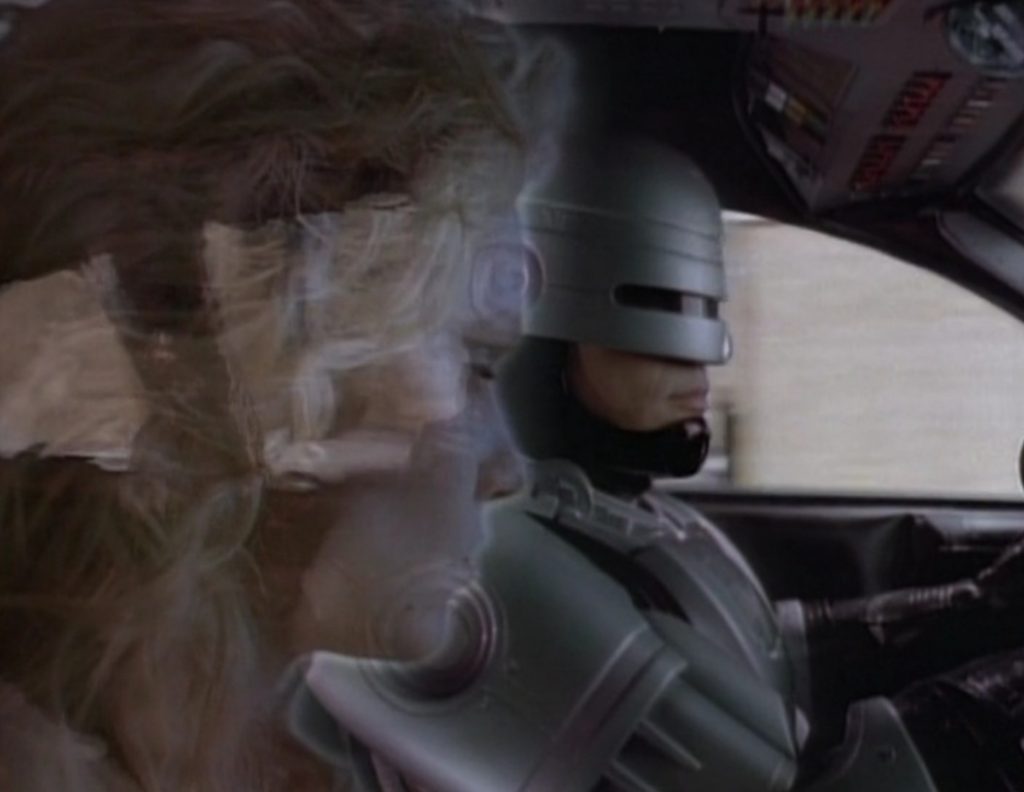
Also, for those keeping score, Murphy’s wife is named “Nancy” here instead of “Ellen” in the movies. Some reports have said this is due to copyright problems, but why is Murphy’s son still named “Jimmy”? Also, why is the station changed to Metro South instead of Metro West? What the fuck did that accomplish? On a more positive note, John Rubenstein as recurring villain Chip Chayken and Blu Mankuma’s Sgt. Parks are surprisingly good stand-ins for Bob Morton and Robert DoQui’s Sgt. Reed respectively. In terms of television series quality, they were solid. The continued tradition of having Media Break interludes and satirical commercials is included to maintain some connection to the other movies, and it’s a great choice (“Don’t forget, recycle your pet”). For the crop of pros coming from 1994’s RoboCop, these transitions belong in this positive category, as they are the best written versions of both. The only genuinely funny things said on the show come from the newscasters and the fake advertisements.
Seriously, how can you not laugh at an OCP credit card that has a 38% annual interest rate?
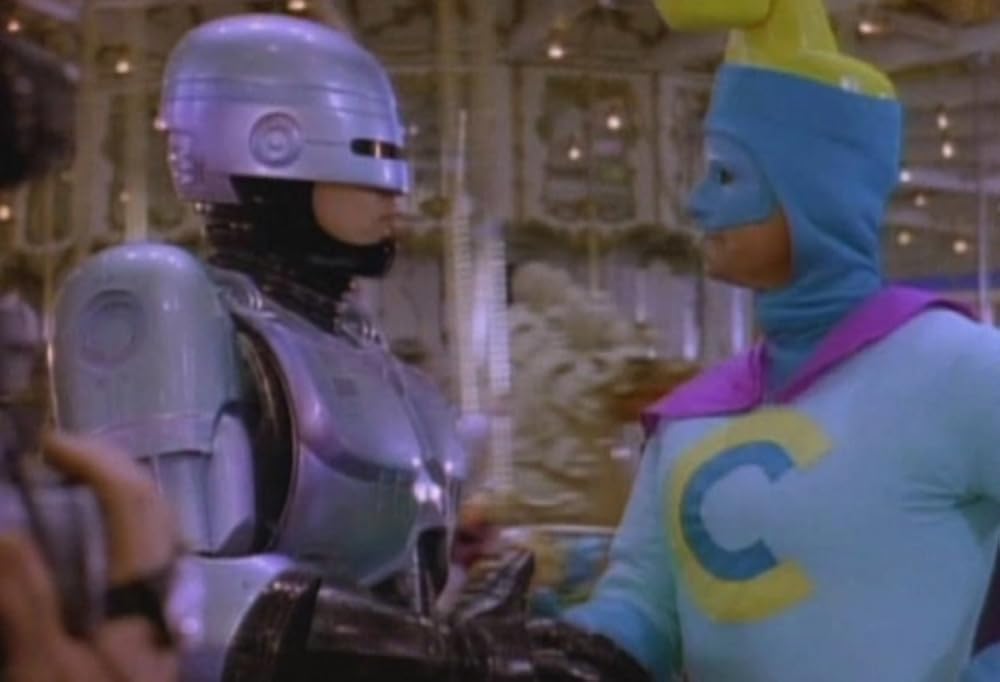
Going along with its inconsistencies with other RoboCop productions, the 1994 show completely forgets the events of RoboCop 2 and 3. Naturally, this is problematic for a lot of reasons, but the most obvious one is that RoboCop 3 came out only a year before the show, so it’s fresh in everyone’s minds. Trying to make fans forget it is a lot to ask for. In their defense, with budgetary concerns in mind and because of how easy Murphy would beat everyone, it does makes sense to forget the addition of RoboCop’s flight pack and removable weaponized arm from RoboCop 3, even though this argument is shot in the foot because Commander Cash uses a jet pack to escape a mall at one point (RoboCop vs Commander Cash). Regardless, forgetting all the events, trials, and tribulations Alex Murphy has faced hurts because it regresses the already-seen progression of the character. Considering where the show begins, the show could have easily taken place after events of the last movie with very little legwork involved. The removal of the flight pack and the weapon arm could have been explained story-wise as OCP deciding it was too dangerous and may be relied upon too heavily, as the corporation has made a concerted effort to make RoboCop less dangerous to the public, which could also explain the toned-down violence and content of the show and why RoboCop does anything he possible can to not kill anyone in the heat of battle. You could further hammer the point home by saying the additions had too many technical drawbacks due to a lack of testing, which is part of what got Dr. Lazarus fired during the interim period between RoboCop 3 and the show. It’s all to keep continuity, which would be welcomed and would have made sense for the drastic tonal switch of the show, easing the viewer into the changes that were made. It also explains why RoboCop has to sit in his special chair again to recharge his body because the whole point of the flight pack, other than flying, was that he could recharge on the go to coincide with the fast pace of 3. In the first and second RoboCop films, the scenes involving Murphy’s chair and him going through tests were used to slow the story down and to explain the intricacies of where he’s at mentally and physically.
However, they move on from it in the third movie, and it’s understood as to why. It’s a natural progression for the movie and character. Going back to it in the show is a pace-hurting backwards step. Each episode comes to a near standstill when Murphy stares blankly head having the same conversations he usually does with Madigan, technician Charlie Lippencott (Ed Sahely), and Gadget (Campbell). Another reason as to why it would make sense for the show to take place after the third film is because of how Murphy is written. Instead of continuously struggling with understanding his human side, pondering the question if he’s just made up of Murphy’s parts but isn’t actually him, or if he himself even thinks he’s human, he instead knows exactly who he is. Through his blank stares into the distance and lack of emotion, there is very much a fully humanized brain in RoboCop’s head. He is Alex Murphy, and he knows it through and through this time around. There are no questions anymore, and there’s no need to backtrack over the philosophical parts that the movies covered ad nauseum. In the show, the general public may not know the reality of RoboCop’s situation, but Murphy does and that’s okay. Plus, Madigan and Parks know too, so that’s really all we need. This way, our protagonist doesn’t have to suffer in silence. It’s a nice change of pace for the franchise. Instead of leaving us in the dark with a lot of questions surrounding Murphy, the show decides to put the viewers’ mind at ease (something the films never did) and it’s appreciated. Murphy knows what happened, and he knows his family, but he also never wants to reveal his existence to them because it would be too difficult to understand. Madigan even tries to persuade him, but he refuses. Granted, she’s probably right because they could have avoided a lot of bullshit throughout this season, but you also see Murphy’s perspective on the matter. They handle this dilemma so much better in the show than the sucky way they went with it in RoboCop 2.
Not sure what Gadget’s purpose is or why they decided to call her that because she’s not necessarily tech-savvy. She just has common sense. Other than that, she doesn’t offer the show much, but she’s a likable presence to have around. The only logical explanation for Gadget’s inclusion is to further its appeal to kids, but I’m not sure if it would really do that. Making Jimmy a recurring character that finds himself in trouble here and there because of a lack of a father figure, and RoboCop having trouble figuring out how to protect him without revealing his identity, was a cool idea though. We have seen the constant flashbacks of his family and how it affects Murphy from the very beginning. Though it happens here too, I’m glad both Jimmy and Murphy’s wife come in and out of a few episodes and maintain a presence in Murphy’s life as a reminder that they still need him, and he still needs them. I imagine in future seasons, they would have eventually had a huge episode where Murphy finally has enough and reveals to them that he’s still alive, which is why they tease their closeness throughout the first season. Sadly, we never got to see the fully realized vision for 1994’s RoboCop. At the same time however, we can see why. It didn’t deserve it.
You can’t have moments where the building RoboCop is in is attacked with a wrecking ball, and he inexplicably jumps on it himself, just so they can do the stunt sequence of him getting thrown out of a building (Faces of Eve). Why would he do that? He could just walk in the opposite direction and exit the building unharmed! Throwing logic to the side simply to utilize the budget is just another example of why this series is as frustrating as it is.
Despite the soap opera-like acting trying its hardest to ruin it, there are still episodes that stand out as better than the others. The idea behind Helen Hunt lookalike Rochelle Carney hosting a true life crime show and working with actual criminals to get content is brilliant (Inside Crime), Murphy learning his family is on welfare and it ending on him stopping a terrorist attempting to blow up a protest (Provision 22), RoboCop being accused of a crime he doesn’t commit (Prime Suspect), the secret behind Gadget’s backstory (Mother’s Day), Madigan unknowingly becoming addicted to drugs (Trouble in Delta City), the war with the C.A.P. Crew (Zone Five), Murphy facing a team of soldiers killed in action and remembering one of them from his childhood (Ghosts of War), RoboCop running into his ex-partner who was also turned into a cyborg (The Tin Man), what could have been what led to a second season as a secret service agent (Public Enemies), and a race for black market organs (What Money Can’t Buy). Still, there’s no doubt that the two best above the rest are any the ones involving the show-stealing father of Alex in Russell Murphy (The Human Factor, Corporate Raiders). His character and subsequently Martin Milner’s performance were good enough and offered so much to the show that he should have been promoted to series regular. The dynamic he has with Murphy, the chemistry he has with the rest of the cast, what his character brings to the table, and the entertainment value that stems from his old school approach and growing relationship with Murphy, especially when he doesn’t know it’s his son at first was the best storyline of the entire series (“It’s amazing what machines can do these days”).
The live-action television series RoboCop is yet another interesting case of what could have been. Had it continued the main character’s journey and maintained its connection to what made him famous, maybe a big budgeted, science fiction-infused, action-packed, episodic ass-kicking is what television needed at that time. Unfortunately, almost everything that followed disappointed fans, insulted adult audiences, and bored children. After being preconditioned since 1987 that the titular star shoots and kills bad guys and then not getting anything more than RoboCop masterfully disarming people left and right, the slow-moving 1994 TV show is frustratingly unsatisfying from an action violence perspective. The story content consists of playschool messages of doing good, one-dimensional villains who ham it up to an audience breaking point, and there are too many idiotic characters, decisions, and moments that will leave the viewer offended with what it’s trying to make them buy into at some points. Had they gone all-in on the goofiness or got rid of the camp and took it seriously, it may have worked, but the lack of commitment to either led to disaster. Even some of the scripts had some intricate and imaginative setups with loads of potential, but every single episode’s trajectory and great second acts are ruined by the predictable cornball finishes, as everything is handcuffed to the uneven tone of the series. It’s a shame because there are positives like Lisa Madigan, a nicer take on the OCP Chairman, creative ways of RoboCop doing detective work (I loved the voice analyzer tool used to determine a liar), Alex Murphy’s relationship with his extended family and how he copes with his situation, and the show not questioning whether RoboCop is Alex Murphy or not. Instead, he 100% is but just decides to live with the secret and bear this cross because it would be too hard on his family and he has too much respect for what he has to do.
Stuff like this is why “I have to go. Somewhere, there is a crime happening” is actually a badass catchphrase, as cheesy as it sounds.
Even so, as much as I love to defend shows and try to come up with ways to defend certain decisions or content, 1994’s RoboCop is not one of them. It was a misguided approach with the wrong people behind it, and it strayed too far away from its built-in fanbase to recover, never mind win new fans over with its outdated direction.



+ There are no comments
Add yours